Are Stainless Steel Cutting Boards Safe Pros and Cons
What Are Stainless Steel Cutting Boards?
Simple Definition
A stainless steel cutting board (or stainless steel chopping board) is a flat food-prep surface made from food-grade stainless steel instead of wood, bamboo, or plastic. It's designed to be non-porous, hygienic, heat-resistant, and extremely durable, especially for messy, high-risk prep like raw meat and fish.
Food-Grade Stainless Steel Types: 304 vs 316
Most safe, hygienic cutting boards use:
304 stainless steel
Common in kitchen equipment and home cutting boards
Non-toxic, non-reactive, and great for everyday food prep
316 stainless steel
Higher resistance to corrosion and salt
Often used in marine or heavy-duty food environments
For home kitchens, 304 food-grade stainless steel is typically the sweet spot: safe, affordable, and reliable.
How Stainless Steel Boards Are Made
Quality food-grade stainless steel boards usually go through:
Cutting and shaping from a steel sheet
Surface finishing (brushed, matte, or polished) to smooth out sharp edges
Deburring and rounding corners so there are no dangerous edges
Optional non-slip backing or silicone edges to keep the board steady on the counter
I design my boards to be solid, stable, and comfortable to handle, not flimsy metal sheets that slide around.
Non-Porous vs Porous Cutting Board Surfaces
One of the biggest reasons people look at stainless steel chopping board safety is the non-porous surface:
Stainless steel (non-porous)
Doesn't absorb blood, juices, or odors
Easier to sanitize completely
Less chance of bacteria hiding in cracks
Wood, bamboo, and some plastics (porous or semi-porous)
Can absorb moisture and food juices
Can develop grooves, stains, and odors over time
May trap bacteria in knife cuts if not cleaned properly
If you care about a hygienic cutting board material with a non-porous cutting board surface, stainless steel is one of the most straightforward options.
Common Uses in Home and Pro Kitchens
You'll see stainless steel cutting boards and work surfaces used a lot in:
Home kitchens
Raw meat, poultry, and fish
Cutting strong-smelling foods (garlic, onions, seafood)
Handling hot pans or cooked food briefly (because it's heat-resistant)
Professional and commercial kitchens
High-volume raw meat prep
Areas with strict food safety and sanitation rules
Stations where boards must be cleaned and disinfected fast
In both cases, stainless steel works best as a hygienic, bacteria-resistant chopping board that’s built for speed, sanitation, and durability, especially when paired with softer boards for regular knife work.
Are Stainless Steel Cutting Boards Safe?
When people ask, "Are stainless steel cutting boards safe?" they're usually talking about three things: food hygiene, chemical safety, and practical day‑to‑day use. A stainless steel chopping board made from food‑grade steel (like 304 or 316) checks all three boxes when it's designed right and used correctly.
What "safe" really means for cutting boards
For me, a safe cutting board means:
It doesn't hold on to bacteria.
It doesn't shed anything into your food.
It doesn't react with what you’re cooking.
It doesn't easily cause slips, cuts, or accidents in normal use.
A hygienic cutting board material should be easy to clean, non-toxic, and tough enough for daily kitchen life.
Food hygiene and bacteria on stainless steel
Stainless steel has a non-porous cutting board surface, so juices from raw meat, chicken, and fish stay on top instead of soaking in. That makes it:
Easier to wash off bacteria with hot water and soap.
Safer for cross-contamination prevention when you're moving fast between foods.
Ideal for kitchens that prep a lot of raw meat and seafood.
Unlike soft plastic boards that develop deep grooves, a quality stainless steel chopping board doesn't get those bacteria-trapping cuts as quickly.
Non-porous benefits for cross-contamination
Because stainless steel is non-porous:
It doesn't absorb odors, colors, or raw meat juices.
You can sanitize it quickly between tasks.
It pairs well with color-coding or using one board mainly as your cutting board for raw meat.
If you're serious about stainless steel cutting board hygiene, this is one of the biggest advantages.
Chemical safety and non-reactive surface
Food-grade stainless steel is a non-toxic cutting board material and is naturally non-reactive with:
Acidic foods (tomatoes, citrus, vinegar)
Salty marinades
Strong spices or sauces
That means no weird flavors, no leaching, and no chemical coating to worry about the way you might with some low-end plastics or treated woods.
Microplastic-free vs plastic boards
With plastic cutting boards, you eventually get:
Micro-grooves that trap bacteria
Tiny plastic shavings that can end up in your food
More frequent replacements (more waste)
A food-grade stainless steel board is microplastic‑free and built to last. If you care about long-term cleanliness and waste, stainless steel is one of the more eco-friendly cutting board options compared to constantly replacing gouged plastic boards. If you prefer plastic for knife-friendliness, pairing steel with a quality, durable plastic option like our double-sided non-slip chopping board with juice groove gives you the best of both worlds.
Heat resistance and dishwasher safety
A heat-resistant cutting board is a real plus in a busy kitchen. Stainless steel:
Tolerates high heat far better than plastic.
Won’t warp in hot water or under a hot pan.
Is generally dishwasher-safe when the design doesn't trap water.
You can run a stainless steel board through a hot dishwasher cycle to sanitize it, which gives you a simple, repeatable cleaning routine.
Realistic risks: slipperiness, sharp edges, misuse
Stainless steel is safe, but it's not perfect. Realistic risks include:
Slippery surface: When wet, steel can be slick if there's no built-in non-slip base or mat.
Sharp edges or corners: Poorly finished boards can be uncomfortable or even unsafe to handle.
Countertop damage: A heavy metal vs wood cutting board can scratch delicate countertops if it doesn't have a protective layer underneath.
This is why I always design stainless steel boards with non-slip features and smooth, rounded edges to avoid these problems.
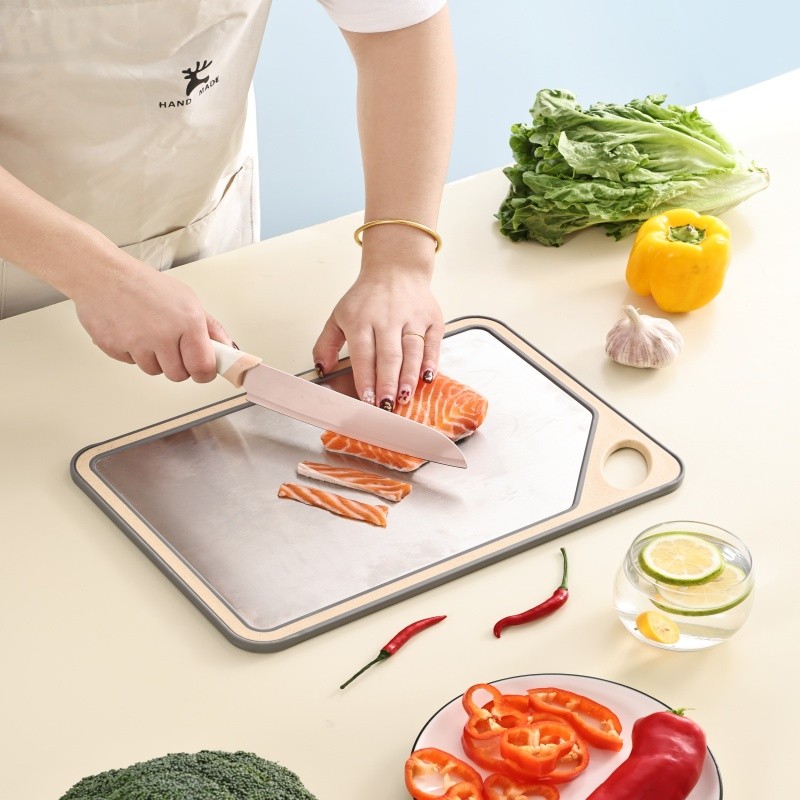
When stainless steel might not be the safest choice
Even a bacteria-resistant chopping board isn't the best fit for every situation. Stainless steel may not be ideal if:
You rely on very thin, high-end Japanese knives and don't want them dulled faster.
You hate loud chopping noise.
You prefer a softer, "forgiving" feel like wood or bamboo for long prep sessions.
In these cases, I recommend using stainless steel mainly as your sanitary cutting board for raw meat and pairing it with a softer board (wood or quality plastic) for fruits, veggies, and bread. If you’re unsure how to balance materials and still meet food-safety standards, it's worth understanding how a customized cutting board can meet strict food safety requirements like those described in our guide to food-safe cutting boards for professional use.
Bottom line: Yes, stainless steel cutting boards are safe—and extremely hygienic—when they're made from true food‑grade stainless, finished correctly, and used with a bit of common sense.
Pros of Stainless Steel Cutting Boards
Hygiene and Antibacterial Advantages
When it comes to stainless steel cutting board safety, hygiene is the biggest win. A non-porous cutting board surface doesn't trap moisture, food juices, or odors, so bacteria have fewer places to hide and grow. Paired with proper washing, a food-grade stainless steel board is one of the most hygienic cutting board materials you can use in a home kitchen.
Bacteria Resistance and Easy Sanitizing
Stainless steel doesn't absorb liquids or flavors, and you can sanitize it fast with:
Hot soapy water
Bleach solution (when needed)
High-temp dishwasher cycles
This makes it a strong bacteria-resistant chopping board choice, especially if you're serious about cutting board safety for raw meat.
Durability and Impact Resistance
A durable kitchen chopping board needs to handle heavy, daily use. Stainless steel doesn't:
Warp from hot water
Crack from impacts
Splinter or chip like wood or bamboo
That's why restaurants and busy home cooks lean toward professional kitchen cutting board materials like stainless steel when they want gear that just doesn't quit.
No Warping, Cracking, or Splintering
Unlike plastic that grooves and wood that dries out, a quality rust-resistant cutting board in stainless steel keeps its shape:
No swollen edges
No splitting down the middle
No fibers or splinters ending up in your food
It's a buy-once, use-for-years kind of product.
Odor and Stain Resistance
If you're tired of boards smelling like onion or garlic, stainless steel is a big upgrade. It's a true odor-resistant cutting board:
Doesn't hold onto fish smells
Doesn't stain from beets, turmeric, or tomato sauce
Rinses clean without scrubbing forever
This is a huge plus for apartment kitchens where smells linger.
Simple Cleaning and Low-Maintenance
Stainless steel is an easy-clean cutting board surface:
Wash, rinse, dry – that's it
No oiling like wood
No deep scrubbing to clear plastic grooves
Many dishwasher-safe cutting boards eventually warp or degrade, but a properly made stainless board holds up far better in normal use.
Eco-Friendly and Low Waste
From an environmental angle, stainless steel is one of the more eco-friendly cutting board options:
No microplastics from plastic cutting boards
Long lifespan reduces replacement waste
Fully recyclable at the end of its life
You're not throwing away a warped plastic board every year.
Best Use Cases: Raw Meat, Fish, and Messy Prep
Stainless steel shines when the job is messy:
Best cutting board for raw meat and poultry
Ideal for fish, shellfish, and juicy marinades
Great for trimming fat, breaking down big cuts, and handling greasy foods
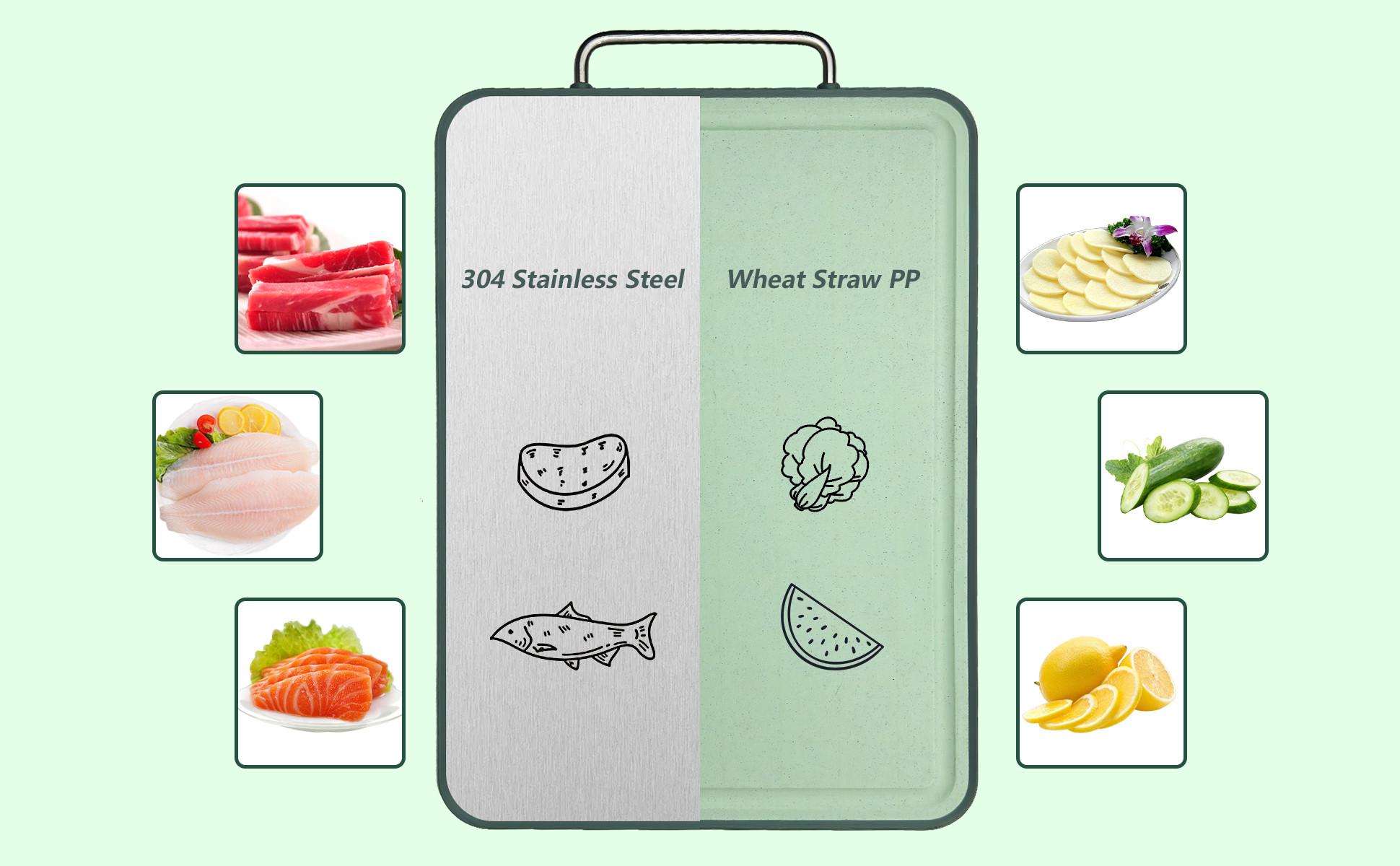
If you want a dedicated sanitary cutting board for home kitchen use, especially for meat and seafood, a steel board is a smart call. For example, our custom stainless steel and wood non-slip double-sided boards give you a stainless side for raw proteins and a softer side for everything else, making cross-contamination control much easier (see the double-sided stainless and wood option).
Cons of Stainless Steel Cutting Boards
Knife sharpness and hard surface issues
Stainless steel cutting boards are tough on knives. The surface is much harder than wood, bamboo, or plastic, so:
Blades dull faster, especially thin, high-carbon chef's knives
You'll need to hone and sharpen more often
Cheap or already-dull knives can start slipping instead of biting into food
If you care a lot about a razor-sharp edge, a stainless steel chopping board shouldn't be your only cutting surface.
Noise, feel, and comfort while chopping
Steel boards are loud and a bit harsh to use:
The "clack" of steel on steel can be annoying in a quiet home kitchen
There's less "give" than wood, so chopping feels harder and more jarring
Long prep sessions can be uncomfortable for your hands and wrists
Some cooks get used to the feel; others go back to wood because it's softer and more forgiving.
Slippery surface with wet food
A non-porous cutting board surface is great for hygiene, but it can get slick:
Wet meat, fish, and veggies can slide around more easily
If your hands are oily or wet, control drops fast
Without a good non-slip backing or mat, the whole board can move on smooth countertops
For safer use, pair your stainless steel board with a rubber mat or a board that has built-in non-slip features.
Weight, handling, and storage
Depending on thickness and size, stainless steel cutting boards can be:
Heavier than plastic and some bamboo boards
Awkward to move one-handed when they're large or greasy
Tougher to store if you're in a small apartment kitchen
Wall hooks, vertical storage slots, or slimmer designs help, but it's still something to consider before switching.
Cost and aesthetics
Compared to basic plastic or entry-level wood, a food-grade stainless steel board usually:
Costs more upfront
Looks more "industrial" and less warm than a nice wood grain
Can show scratches and scuffs over time, even though that doesn't affect safety
If you want a cozy, natural look on your countertop, stainless steel may clash with your style.
When stainless steel is not ideal
A stainless steel cutting board isn't the best pick when:
You mostly do delicate knife work and want max edge life
You love the quiet, cushioned feel of wood
You want a cutting surface that doubles as a serving board for cheese or charcuterie
You're extremely sensitive to noise or vibrations while chopping
For some kitchens, a mix of materials works better: a wood or plastic board for everyday slicing, and a stainless steel board for high-risk, high-mess jobs like raw meat—especially if you're already concerned about hygiene and antimicrobial cutting board safety.
Stainless Steel vs Other Cutting Board Materials
When people ask, "Are stainless steel cutting boards safe?", what they really want to know is how they stack up against wood, plastic, bamboo, and glass. Here's how I look at it as someone who actually uses and sells these boards.
Stainless Steel vs Wood Cutting Boards
Safety & hygiene:
Stainless steel is non-porous, bacteria-resistant, and super easy to sanitize. It doesn't absorb juices, odors, or stains. Great for raw meat and fish.
Wood (especially maple or walnut) is more "knife friendly," and some hardwoods have mild natural antibacterial properties, but wood is still porous. It can soak up blood and juices and needs more careful care.
Knife-friendliness & maintenance:
Wood boards are gentler on blades, so your knives stay sharp longer.
Stainless steel cutting boards can dull knives faster because the surface is harder—but they're lower maintenance: no oiling, no cracking, no warping.
If you love your expensive chef's knife, wood is better for everyday chopping. For high-hygiene jobs like raw chicken, stainless steel is the safer, cleaner option.
Stainless Steel vs Plastic Cutting Boards
Hygiene & microplastics:
Plastic boards start out okay, but once they get deep grooves, they trap bacteria and are harder to clean completely. Over time they also shed tiny microplastics into food and into your sink.
A food-grade stainless steel board has a smooth, non-porous surface with no fibers or microplastics. It’s easy to scrub, bleach, or run through the dishwasher safely.
If you're buying in bulk for a kitchen or food business, it's worth understanding how plastic compares as a hygienic cutting board material; I go deeper into this in our guide for bulk plastic cutting boards.
Durability & long-term cost:
Plastic is cheap upfront, but you replace it a lot as it grooves, stains, and warps.
Stainless steel chopping boards cost more at the start, but they don't warp, chip, or shed. Over a few years, steel usually wins on total cost, especially in busy kitchens.
Stainless Steel vs Bamboo Cutting Boards
Bamboo is marketed as eco-friendly, and it is renewable—but it's also fairly hard and often glued with resins. That means it's not as knife-friendly as people think, and cheap bamboo can split or crack.
Stainless steel is also an eco-friendly cutting board option in the long run: you buy once, keep it for years, and it's fully recyclable. It doesn't absorb moisture, so no swelling, mold, or funky smells.
Bamboo is fine for light home use. For heavy raw meat prep and serious hygiene, stainless steel is the better play.
Stainless Steel vs Glass Cutting Boards
Glass cutting boards are loud, slippery, and absolutely brutal on knives. The surface is harder than steel and dulls blades extremely fast.
Stainless steel boards are still firm, but more forgiving than glass and far more practical for real cooking.
If you care about your knives at all, skip glass. If you want a sleek, modern, hygienic cutting board, stainless steel gives you the "clean look" without destroying your tools as badly.
Which Cutting Board Fits Your Cooking Style?
Here's how I'd match materials to how you cook:
Stainless steel cutting board
Best for: raw meat, poultry, fish, messy prep, high hygiene, easy sanitizing, dishwasher use, apartment kitchens with limited counter space.
Wood cutting board
Best for: veggie and fruit chopping, herbs, bread, and daily knife work where you care about edge life.
Plastic cutting board
Best for: budget backups, camping, or quick use when you don't mind replacing often.
Bamboo cutting board
Best for: light home use and serving boards.
Glass cutting board
Best for: serving/cheese boards, not actual cutting.
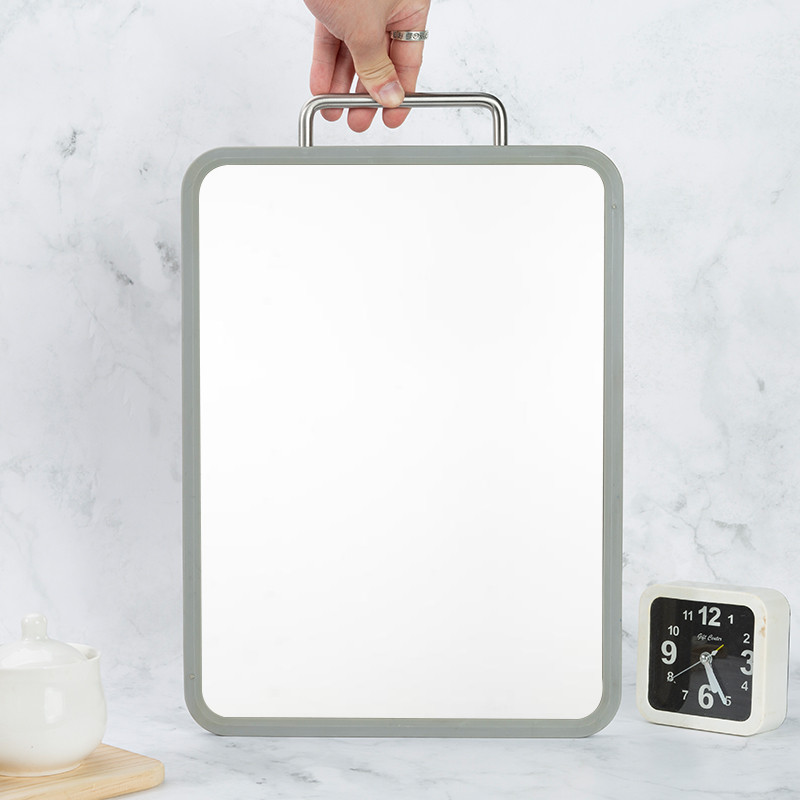
When Stainless Steel Is the Better Choice
I recommend a stainless steel cutting board when:
You prep a lot of raw meat or seafood and want the safest, most hygienic, non-porous cutting board surface.
You want antibacterial, easy-clean performance and fast sanitizing between tasks.
You're tired of warped plastic or stained wood and want a durable kitchen chopping board that actually lasts.
You care about avoiding microplastics from plastic cutting boards and want a non-toxic cutting board material.
Most home cooks in the global get the best setup by pairing one stainless steel board for raw proteins with one good wood board for everyday chopping. That combo hits food safety, knife health, and convenience all at once.
If you want a stainless option that's sized right and actually built for raw meat prep, you can look at our large stainless steel cutting board design—it's built around hygiene, non-slip stability, and long-term durability.
How Stainless Steel Cutting Boards Affect Your Knives
Stainless steel cutting boards are safe and very hygienic, but they're not the most knife-friendly cutting surface. If you care about sharp blades, you need to know how stainless steel impacts them.
How surface hardness impacts blades
Stainless steel is much harder than wood, bamboo, or plastic. That means:
The board doesn't "give" when you cut.
The knife edge takes more impact with every chop.
Micro-chips and edge rolling happen faster than on softer boards.
This is the trade-off for choosing a durable, hygienic cutting board material like food‑grade stainless steel.
Why dulling happens on stainless steel
Knife dulling on a stainless steel chopping board comes from:
Constant hard contact with a non-porous metal surface
Heavy chopping or pounding instead of smooth slicing
Twisting the blade while cutting (especially around bones or joints)
You're not "ruining" your knives, but you will sharpen more often compared to using wood or quality plastic.
Types of knives that handle steel boards better
Some knives stand up to stainless steel boards better than others:
Western chef's knives with tougher steel (German-style)
Utility knives and boning knives used for raw meat prep
Thicker blades (not ultra-thin Japanese blades)
Mid-range stainless knives you don't mind sharpening regularly
If you own high-end Japanese knives or very thin blades, limit them on stainless steel and stick to softer cutting surfaces.
Knife technique tips to reduce wear
On a stainless steel cutting board, technique matters:
Use smooth slicing motions, not aggressive chopping.
Avoid twisting the blade to pry or scrape.
Use the spine or a scraper, not the cutting edge, to move food.
Don’t hack through bones; use a cleaver or different tool.
These simple habits protect your edge and still let you enjoy a bacteria-resistant chopping board.
Sharpening and honing regularly
If you prep a lot on stainless:
Hone your knife with a steel every few uses to realign the edge.
Sharpen on a stone or professional sharpener when honing stops helping.
Expect more frequent sharpening than with wood, but not so much that it ruins a decent blade.
Think of it as maintenance: stainless gives you low-maintenance boards, but your knives need a bit more love.
When to rotate between steel and softer boards
A smart setup for most global home kitchens:
Use a stainless steel cutting board for raw meat, fish, and messy prep (high hygiene, easy sanitizing).
Use wood or quality plastic for fruits, veggies, herbs, and bread (more knife-friendly).
Rotating boards this way reduces dulling, cuts down cross‑contamination, and keeps your gear working longer. If you want a heavy-duty option built for this kind of mixed use, you can look at kitchen stainless steel cutting boards designed specifically for safe raw meat prep and easy cleaning, like the options at Chopaid Kitchen.
Signs your knives need care or replacement
On a stainless steel board, pay attention to:
Slipping instead of biting into tomato skins or onions
Needing more force for basic cuts
Visible nicks, chips, or a shiny rolled edge
Rough, torn cuts instead of clean slices
If sharpening doesn't bring the edge back or the blade is badly chipped, it may be time to retire that knife and upgrade. A sharp knife plus a sanitary cutting board for home kitchens is the safest combo you can use.
Maintenance and Care Tips for Stainless Steel Cutting Boards
Keeping a stainless steel cutting board safe and hygienic is simple if you follow a few basics. Here's how I'd maintain it in a busy home kitchen.
Daily Cleaning After Chopping
After each use, especially with raw meat or fish:
Rinse off food scraps with warm water
Wash with hot, soapy water and a soft sponge or cloth
Rinse thoroughly and dry with a clean towel right away
For raw meat, finish with a quick wipe of diluted bleach (1 tbsp bleach per gallon of water) or white vinegar, then rinse and dry
This routine keeps the non-porous cutting board surface free of bacteria and odors.
Deep Cleaning and Sanitizing
Once a week—or after heavy raw meat prep—do a deeper clean:
Wash as normal with hot, soapy water
Spray or wipe with a food-safe sanitizer (bleach solution or 70% alcohol)
Let it sit for 1–2 minutes, then rinse and dry
For stuck-on residue, use a nylon scrub pad, not steel wool, to avoid scratches
If you also use plastic boards, you can see how steel compares by checking a guide like this HDPE plastic cutting board overview.
Dishwasher Use: When It's Safe
Most food-grade stainless steel cutting boards (304 or 316) are dishwasher-safe, but:
Top rack or away from sharp items is best
Avoid overcrowding so water can reach all surfaces
High-heat, sanitize cycles are fine for quality boards
Skip the dishwasher if the board has glued-on or low-quality plastic parts that might warp
If you're worried about long-term wear, handwashing is always the safest play.
Preventing Scratches and Visible Wear
Stainless steel will show fine scratches over time—that's normal. To keep it looking good:
Use normal knife cutting, not pounding bones or frozen food with force
Avoid serrated knives for heavy chopping
Don't use steel wool or harsh abrasive powders
Cut, don't drag heavy pots, pans, or appliances across the board
Surface scratches don't usually affect stainless steel cutting board safety; they're mostly cosmetic.
Handling Stains, Discoloration, and Rust Spots
Good rust-resistant cutting boards rarely corrode, but hard water and abuse can leave marks:
For light discoloration: make a paste of baking soda + water, rub gently with a soft cloth, rinse, and dry
For stubborn stains: wipe with white vinegar, let sit a minute, rinse and dry
For small rust spots: rub gently with baking soda paste or a non-scratch scrub pad, rinse, dry fully, and avoid soaking in standing water
If rust keeps coming back, the steel may not be true food-grade.
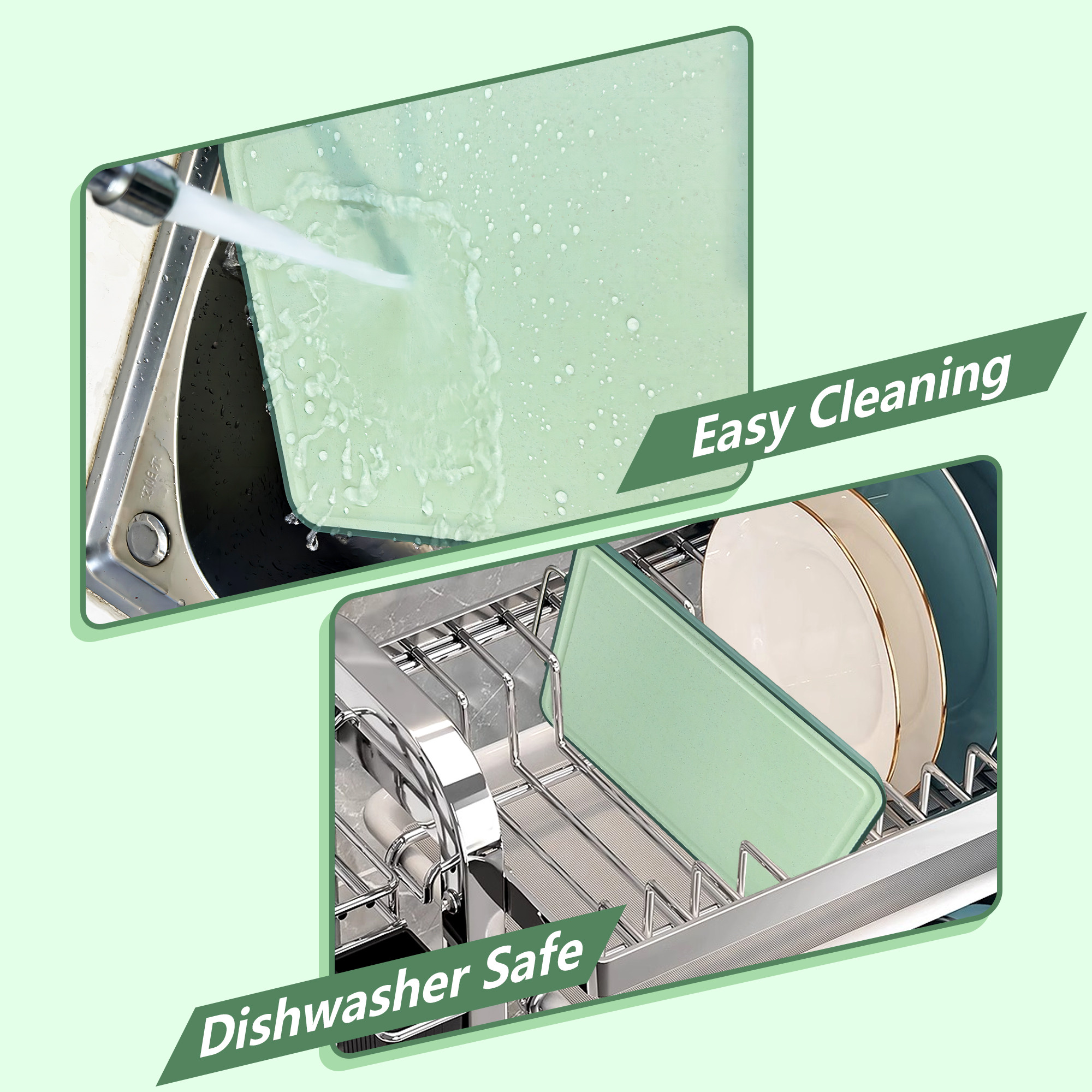
Drying and Storing Stainless Steel Boards
To avoid rust and keep things sanitary:
Dry immediately after washing—don't let it air-dry in a puddle
Store vertically in a rack or against a wall so air can circulate
Keep away from constantly damp areas (under-sink cabinets, wet towels)
For small kitchens, a thin, flat metal vs wood cutting board is easy to slide beside the fridge or cabinet
Keeping the Board Stable and Non-Slip
A safe stainless steel chopping board shouldn't move around:
Use a non-slip silicone or rubber mat under the board
A damp paper towel or dish towel under the board works in a pinch
Look for boards with built-in non-slip edges, like the style on some non-slip edge cutting boards with garlic grinder surfaces similar to this type of board
Maximizing the Lifespan of a Stainless Steel Board
To get years of use and keep food safety high:
Use it mainly for raw meat, fish, and messy prep jobs
Rotate between stainless steel and a softer, more knife-friendly cutting surface (like wood or HDPE) to protect your blades
Don't use it as a hammer, trivet for super-hot cast iron, or pry bar
Clean quickly after acidic foods (tomatoes, citrus) and salty marinades
With basic care, a durable kitchen chopping board in stainless steel can outlast most plastic boards and stay a reliable, hygienic cutting board material in your kitchen for a long time.
Who Should Use Stainless Steel Cutting Boards?
Best for hygiene-focused home cooks
If you care a lot about food safety, stainless steel cutting boards are a strong choice. The non-porous cutting board surface doesn't soak up juices, odors, or stains, which makes it easier to keep things sanitary day after day.
Great for raw meat and fish prep
Families that handle a lot of raw meat, poultry, and fish will benefit the most. A stainless steel chopping board is ideal as your "raw protein" station because it:
Resists bacteria buildup better than porous materials
Handles heavy scrubbing, hot water, and sanitizing sprays
Won't absorb blood, fish smell, or strong seasonings
Many people pair steel with a separate antibacterial plastic cutting board for veggies or ready-to-eat foods; for example, our HDPE antibacterial cutting boards work well alongside stainless.
Perfect for busy and small kitchens
If you run a busy kitchen or cook a lot in a small apartment, a stainless steel cutting board makes sense because it:
Cleans fast with just soap and hot water
Is dishwasher-safe (check size and manufacturer guidelines)
Handles high-heat items like hot pans or roasted meats
Can double as a heat-resistant trivet or prep surface
You get one durable kitchen chopping board that does a lot without taking much space.
Ideal for meal preppers and batch cookers
If you prep meals for the week, a hygienic cutting board material matters. Stainless steel is:
Consistent from batch to batch—no lingering odors or flavors
Easy to sanitize between different foods to avoid cross-contamination
Tough enough for repeated chopping sessions and heavy use
Who should skip or limit stainless steel boards
Stainless steel is not for everyone. You may want to limit its use if:
You’re very picky about knife sharpness and don't want faster dulling
You hate loud chopping noise or prefer a softer, "cushioned" feel
You mostly slice delicate ingredients and rarely handle raw meat
In those cases, a wood or HDPE board might be a better everyday surface. We also offer long-lasting HDPE cutting boards if you want a softer, knife-friendly option.
How to pair stainless steel with wood or plastic
The smartest setup for most global home kitchens is a combo approach:
Stainless steel cutting board: raw meat, fish, messy or high-risk jobs
Wood or bamboo board: bread, herbs, fruit, and serving
Plastic/HDPE board: backup for quick veggie or snack prep
This way, you get the food safety and non-toxic cutting board material benefits of stainless steel where it matters most, without sacrificing knife comfort or aesthetics for lighter tasks.
Why Choose Chopaid Stainless Steel Cutting Boards
What Makes Chopaid Boards Different
I design Chopaid stainless steel cutting boards for real home kitchens and busy cooks who care about hygiene, durability, and easy cleanup. Every board is built to be a non-porous, antibacterial cutting surface that actually fits into daily global cooking habits—lots of raw meat, takeout reheats, and dishwasher use.
Food-Grade Stainless Steel & Build Quality
| Feature | What You Get |
| Steel grade | Food‑grade 304 stainless steel (safe for everyday food prep) |
Surface | Non-porous, non-toxic, microplastic‑free |
| Edges & corners | Smoothed and rounded for safe handling |
| Thickness | Rigid, no bending or warping in normal use |
Non-reactive with acidic foods (tomato, lemon, vinegar).
Rust-resistant when used and dried properly.
Built for long-term, professional-style food safety at home.
Non-Porous, Antibacterial Design Details
Completely non-porous cutting board surface – it doesn't absorb juices, smells, or dyes.
Wipes clean fast and can be sanitized with:
Hot water and soap
Diluted bleach or vinegar
Ideal as a hygienic cutting board material for raw meat, poultry, and fish.
If you also use plastic boards, pairing a steel board with a dedicated non-slip plastic cutting board gives you a full, food-safe setup for different tasks.
Non-Slip Features & User-Friendly Touches
Non-slip base or corner pads to keep the board stable on slick countertops.
Light enough for daily use, but heavy enough not to slide while chopping.
Hanging holes or slim profiles on certain models for easy storage in small kitchens.
Sizes, Thickness, and Style Options
| Use Case | Recommended Style |
| Apartment / small kitchen | Slim, medium-size board for daily prep |
| Family cooking & meal prep | Larger, thicker board for big batches |
| Snack/fruit/quick jobs | Compact board for fast grab-and-go use |
Clean, minimal stainless look that matches modern global kitchens.
Different thicknesses so you can balance weight vs. stability.
Safe Raw Meat Prep Support
Chopaid stainless steel boards are one of the best cutting boards for raw meat if you care about cross-contamination control:
Juices don't soak in, so bacteria can't hide in pores or deep grooves.
Surface sanitizes quickly between chicken, beef, and fish.
Perfect as your dedicated raw-meat cutting board while using wood or plastic for bread, fruit, or cooked foods.
For a deeper dive into raw meat safety and plastic alternatives, you can also look at our breakdown on plastic cutting board safety here: Are Plastic Cutting Boards Safe?
Value, Durability, and Long-Term Cost
No warping, no splintering, no microplastic shedding.
Handles high heat, dishwashers, and heavy use without falling apart.
You buy it once and keep it for years, instead of replacing cheap plastic boards regularly.
| Material | Lifespan (Typical) | Replacement Frequency |
| Cheap plastic | 6–18 months | High |
| Bamboo/soft wood | 1–3 years (with care) | Medium |
| Chopaid stainless | Multi-year, heavy use | Low |
When a Chopaid Board Is the Right Upgrade
A Chopaid stainless steel chopping board is a smart move if:
You prep raw meat, fish, or seafood several times a week.
You want a hygienic, bacteria-resistant cutting board that's easy to sanitize.
You're tired of stained, smelly, or grooved plastic boards.
You prefer a low-maintenance, dishwasher-safe cutting board that just works.
Pair it with a wood or plastic board for gentler knife work, and you'll have a safe, efficient, and durable cutting board setup that covers every cooking style in your kitchen.
FAQs About Stainless Steel Cutting Boards
Are stainless steel cutting boards safe for raw meat?
Yes. A food‑grade stainless steel cutting board (like 304/316) is non-porous, so juices from chicken, beef, or fish can't soak in and harbor bacteria. That makes stainless one of the safest, most hygienic cutting board materials for raw meat, as long as you still handle basics:
Use separate boards for raw meat vs ready‑to‑eat foods
Wash with hot, soapy water after each use
Sanitize regularly (bleach solution or dishwasher-safe cycle)
Do stainless steel boards dull knives permanently?
They do dull knives faster than wood or plastic because the surface is harder. But this dulling is not permanent:
Regular honing and sharpening fully restore the edge
Use softer‑steel kitchen knives instead of ultra‑hard Japanese blades if you cut on steel daily
Rotate between a stainless steel board (raw meat, messy prep) and a wood/plastic board (fine chopping) to balance hygiene and knife life
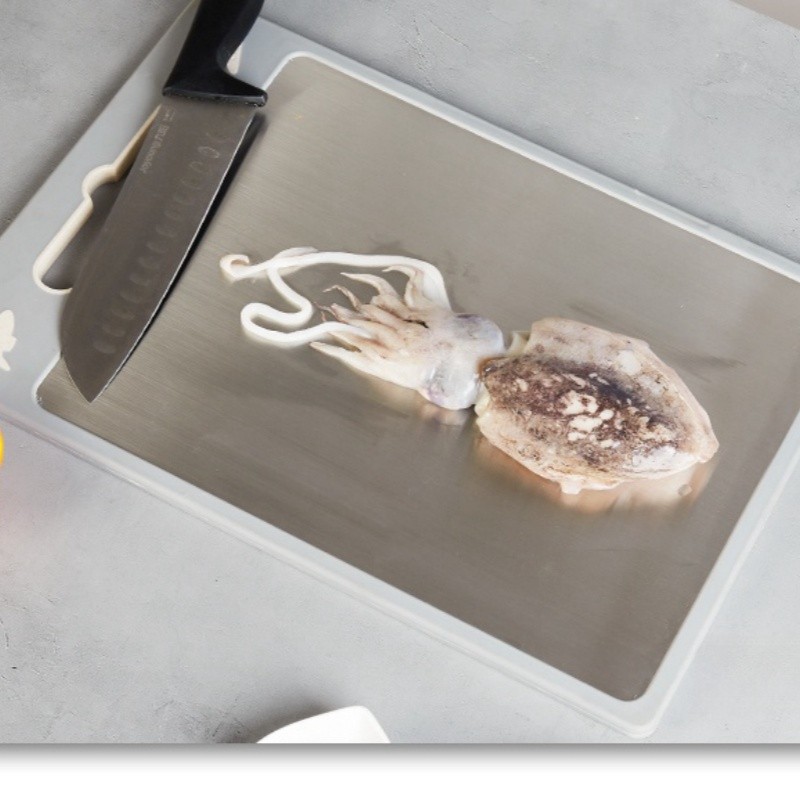
Are stainless steel cutting boards really dishwasher-safe?
Most food‑grade stainless steel boards are dishwasher-safe, especially solid one‑piece designs. They handle:
High heat
Detergent
Steam drying
Just check the manufacturer's note. On my own stainless boards, I still:
Rinse off heavy debris first
Place them securely so they don't slam into other items
For reference, Chopaid's stainless steel chopping boards are designed to handle commercial‑style cleaning and dishwashers without warping or melting, unlike many plastic options.
How do stainless steel boards compare in long-term cost?
Upfront, stainless costs more than basic plastic or cheap wood. Over time, it usually wins on total cost because it:
Doesn't warp, crack, or splinter
Doesn't need oiling or special care
Lasts for years, even in busy home kitchens
You might replace plastic boards many times as they groove and stain, while a stainless steel board can stay in rotation for the long haul, especially if you also use a softer everyday board.
Can stainless steel cutting boards rust or stain?
Quality 304/316 stainless is very rust-resistant, but not totally bulletproof. Rust or stains can show up if:
The board stays wet for long periods
Harsh chemicals or steel wool damage the surface
It's exposed to salty water and never dried
To avoid issues:
Wash, then dry thoroughly
Don't use steel wool; use non‑scratch scrubbers
Remove discoloration with a baking soda paste or stainless cleaner
Can I use stainless steel boards for all foods?
You can, but it's not always ideal. Stainless works great for:
Raw meat, poultry, fish
Strong‑smelling foods (onions, garlic, seafood)
Messy, staining foods (beets, turmeric, tomato sauce)
For delicate knife work (herbs, fine dicing, long prep sessions), most home cooks prefer a softer, knife‑friendly surface like wood or plastic. Many global kitchens use stainless as a "raw/meat board" and keep a wood or plastic board for everyday chopping.
Do stainless steel cutting boards damage countertops?
They can if you're careless. The board itself is hard and can scratch softer countertop materials if you:
Drag it across quartz, marble, or laminate
Drop it on stone edges
To protect your counters:
Choose a board with non‑slip, cushioned feet or a silicone ring
Set it down gently and lift instead of sliding
Chopaid's non-slip cutting board designs use anti‑slip features that help stabilize the board and protect both your knives and countertops.
Is stainless steel better than wood for home kitchens?
It depends on your priorities:
Stainless steel is better if you want:
Maximum hygiene for raw meat and fish
A non‑porous cutting board surface that doesn't absorb odors
Easy, fast sanitizing (bleach, dishwasher, hot water)
Wood is better if you want:
A knife-friendly cutting surface for everyday chopping
A warmer, more natural look on your counter
A quieter, softer cutting feel
Most global home kitchens get the best of both worlds by pairing a stainless steel meat board with a wood or plastic everyday board. That setup gives you top‑tier food safety for raw proteins and a comfortable surface for daily cooking.
If you have interested in any cutting board, please feel free to contact sales@chopaid.com at any time