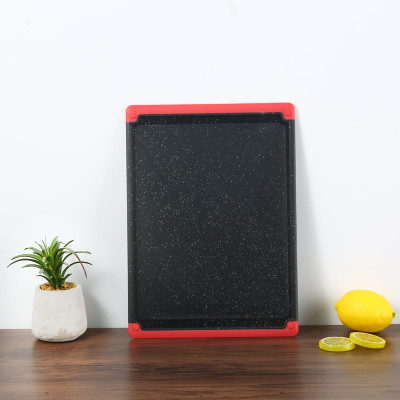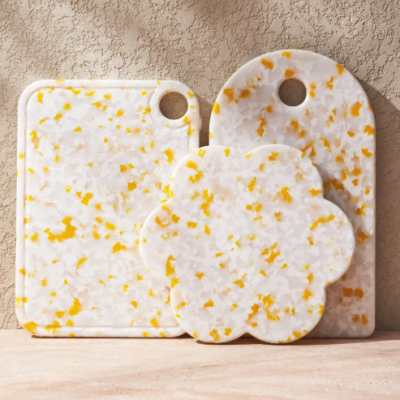
How Stainless Steel Cutting Boards Enhance Kitchen Hygiene and Blade Longevity
Hello fellow home cooks! Today, I want to talk about something crucial for every kitchen: the cutting board. It's a fundamental tool we use daily, yet it can be a hidden source of kitchen nightmares. We're diving deep into the world of stainless steel cutting boards and exploring how they can seriously upgrade our kitchen hygiene and even play a role in the health of our beloved knives.
You might have heard mixed reviews about these modern, sleek boards. Some praise their cleanliness, while others fear for their knife edges. I'm here to share my insights and experiences, cutting through the noise to get to the facts. We'll look at how a high-quality stainless steel cutting board, like those from Chopaid, can be a genuine game-changer, transforming your food prep from a potential hazard into a clean, efficient, and surprisingly blade-friendly experience.
Key Takeaways
For those in a hurry, here’s a summary of what makes stainless steel cutting boards a superior choice for the modern kitchen:
- Unmatched Hygiene: The primary advantage of stainless steel is its non-porous nature. Unlike wood or plastic, it doesn't harbor bacteria, absorb liquids, or retain odors and stains from foods like garlic, onions, or raw meat. This makes it incredibly easy to clean and sanitize, significantly reducing the risk of cross-contamination and foodborne illnesses. A simple wash with soap and water, or a cycle in the dishwasher, is enough to restore it to a perfectly sterile state.
- Exceptional Durability: Stainless steel is one of the most durable materials available for kitchenware. It resists warping, cracking, and deep scratches that can become breeding grounds for germs in other board types. While it will show superficial scratches from knife use (which is normal and indicates the board is softer than the blade), it won't break down or need replacement for many, many years, making it a long-term, sustainable investment.
- Blade Longevity Re-examined: The myth that stainless steel boards instantly destroy knives is outdated and often based on experiences with improper or low-quality materials. High-quality, food-grade stainless steel (like 304) is specifically designed to be softer than the hardened steel of quality kitchen knives. While it is harder than wood or plastic, proper cutting technique (using a slicing motion rather than a forceful-downward chop) minimizes wear. The hygienic benefits also protect blades from corrosive bacterial acids and rust, contributing to their overall longevity.
- Modern Aesthetics and Practicality: A stainless steel cutting board brings a sleek, professional look to any kitchen, complementing other stainless steel appliances. Its ability to be chilled in the freezer makes it an excellent surface for working with sensitive doughs like pastry or pasta. Furthermore, its resilience against stains and odors means it will look clean and professional for its entire lifespan. Many modern designs also include non-slip silicone edges or feet to ensure stability during use.
The Unbeatable Hygiene of Stainless Steel Cutting Boards
When it comes to kitchen safety, hygiene is paramount. The surface where you prepare your raw chicken, chop your fresh vegetables, and slice your bread is a critical control point in preventing foodborne illness. For years, the debate has raged between wood and plastic, but stainless steel emerges as a clear winner from a purely microbiological standpoint. Its inherent properties create an environment where harmful pathogens simply cannot thrive.
What Makes Other Boards Risky?
Many of us grew up with a trusty wooden or plastic cutting board. They feel traditional, and for a long time, they were the only options. However, years of use and scientific scrutiny have revealed their hidden dangers. Both materials are porous to varying degrees, which is the root cause of most hygiene-related issues on a cutting surface.
Bacteria, odors, and cross-contamination risks I've experienced.
Plastic cutting boards, often touted as a hygienic alternative to wood, develop a network of deep knife grooves over time. These grooves are nearly impossible to clean thoroughly, even in a dishwasher. Studies have shown that these scars become microscopic havens for bacteria like Salmonella, E. coli, and Listeria. Once these bacteria establish a biofilm inside the grooves, they are protected from sanitizers and can easily transfer to the next food you prepare—a classic case of cross-contamination. You’ll also notice that over time, your plastic board might start to smell of onions or look permanently stained from beets or turmeric, a clear sign that the material has absorbed particles from the food.
Wooden boards have natural antimicrobial properties, but this defense has its limits. Wood is highly porous and absorbent. If not oiled meticulously and regularly, it can soak up meat juices, blood, and water, creating a damp, dark environment deep within the wood fibers where bacteria can multiply. A deep knife cut in a wooden board can become a permanent, uncleanable reservoir for contaminants. This is why many health departments restrict the use of wooden cutting boards in commercial kitchens for preparing high-risk foods like raw meat and poultry.

My Chopaid Stainless Steel Cutting Board: A Non-Porous Powerhouse.
My switch to a stainless steel cutting board was driven by these very concerns. The fundamental advantage of stainless steel is its complete lack of porosity. It is a solid, non-porous material, which means there are no tiny holes, cracks, or fibers for bacteria, mold, or food juices to penetrate. This isn't just a claim; it's a proven scientific fact that makes it the material of choice for surgical instruments, commercial kitchens, and food processing plants.
Ease of cleaning and preventing germ buildup.
The non-porous surface of a stainless steel cutting board makes cleaning astonishingly simple and effective. Unlike wood or plastic, there's nowhere for germs to hide. After dicing raw chicken or slicing fish, I can simply wash the board with hot, soapy water, and it is perfectly clean. For an extra level of safety, a quick wipe with a food-safe disinfectant or a run through the dishwasher ensures it is completely sanitized and ready for the next task.
This ease of cleaning directly translates to preventing germ buildup. There are no lingering odors from garlic or fish, no stubborn stains from turmeric or berries, and most importantly, no invisible colonies of bacteria waiting to contaminate my family's food. The surface remains inert and unaffected by the foods it comes into contact with. This peace of mind, especially when preparing meals for children or a large gathering, is perhaps the most significant benefit of having a stainless steel cutting board in my kitchen arsenal. It provides a consistently clean slate for every meal.
Understanding Blade Life: How Stainless Steel Cutting Boards Play a Role
One of the most persistent myths surrounding stainless steel cutting boards is that they will instantly ruin your expensive knives. This concern is understandable—we invest a lot in our blades and want to protect their razor-sharp edges. However, the relationship between a knife blade and a stainless steel surface is more nuanced than a simple "hard-versus-soft" argument. With the right materials and proper technique, a stainless steel board can be a perfectly suitable, and even protective, part of your kitchen toolkit.
The Edge on Dulling: What You Need to Know.
Any time a knife edge makes contact with a surface, there is a microscopic interaction that affects its sharpness. The degree of dulling depends on the hardness of the cutting surface relative to the hardness of the blade, the force applied, and the type of cutting motion used.
Understanding how blade edges interact with different cutting surfaces.
A knife maintains its sharpness by having a very fine, perfectly aligned edge—a V-shape that is only a few microns thick. When you cut, this edge is subjected to pressure and friction.
- On Soft Surfaces (like wood or soft plastic): The knife edge sinks slightly into the material. The surface gives way, which cushions the blade and minimizes the lateral force that can misalign or "roll" the edge. This is very gentle on the knife.
- On Hard Surfaces (like glass, stone, or ceramic): The surface does not give way at all. The full force of the cut is transferred directly back to the fine knife edge. This can cause the edge to chip (micro-chipping) or quickly roll over, leading to rapid dulling. These materials should never be used as cutting boards.
- On Stainless Steel Surfaces: High-quality stainless steel cutting boards are specifically engineered to be softer than the hardened steel used in good kitchen knives. Instead of the knife sinking in, the board's surface yields on a microscopic level. This results in fine scratches on the board, not on the knife. It's a visual confirmation that the board is fulfilling its purpose by being sacrificial to the blade's edge.
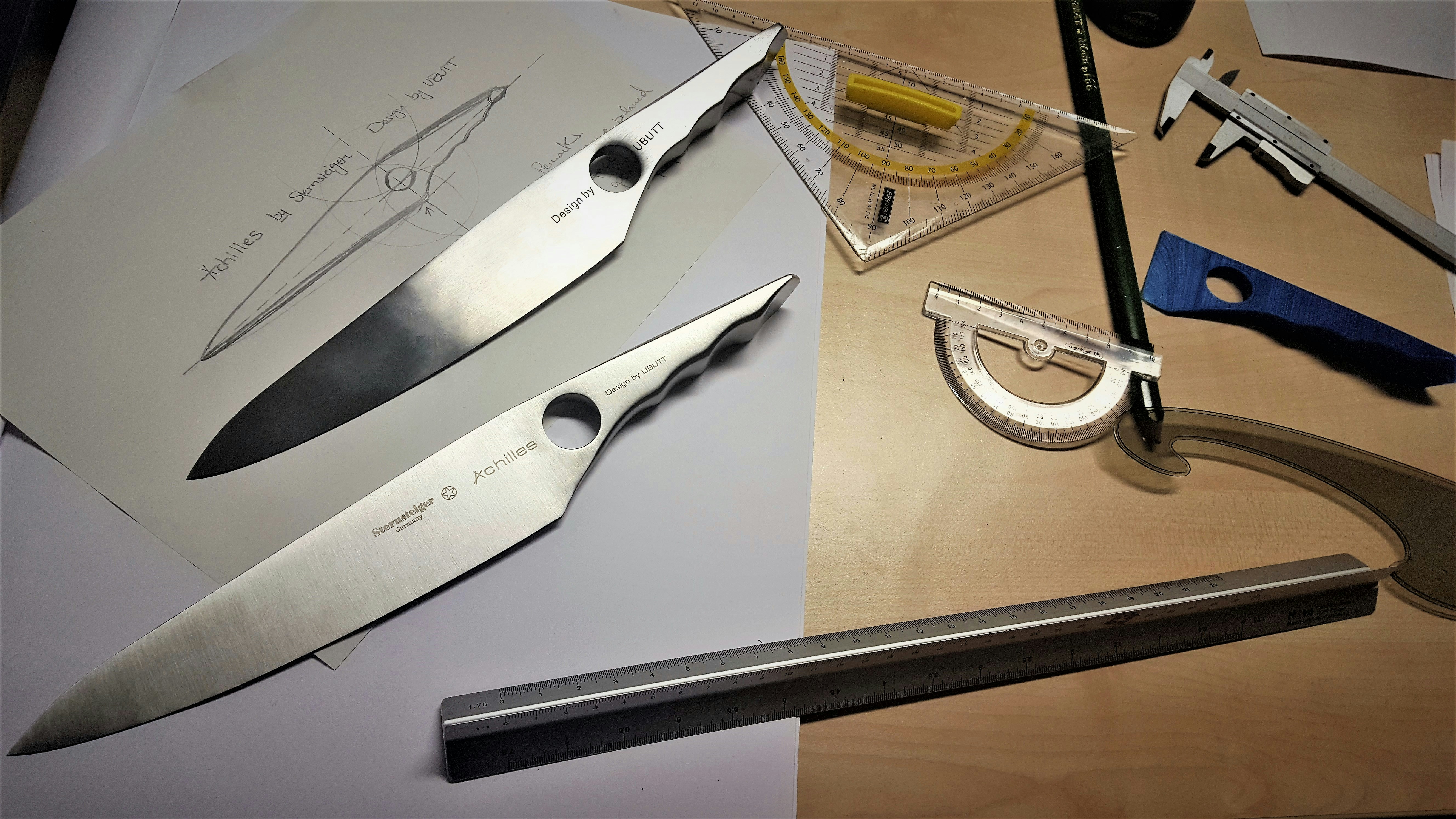
Why some boards might dull knives faster (yes, including some stainless steel).
The "stainless steel dulls knives" myth isn't entirely baseless; it often stems from two key issues: low-quality materials and improper technique.
- Material Hardness: Not all stainless steel is created equal. A board made from an excessively hard grade of steel could indeed be damaging to a knife. This is why it's crucial to choose a board made from a reputable, food-grade stainless steel like 304 or 316, which have a known hardness that is safely below that of typical knife steel. Cheap, non-brand boards might use inferior materials with inconsistent hardness.
- Improper Technique: The biggest culprit in dulling knives on any surface, but especially a harder one, is poor technique. If you are using a forceful, vertical chopping motion—slamming the blade down—you are creating a high-impact collision between the edge and the board. This will dull a knife on any board, but the effect is amplified on a less-forgiving surface like steel. The correct technique is a smooth, slicing motion, drawing the blade across the food. This uses the length of the blade to do the work and is much gentler on the edge.
Protecting Your Knives Beyond Sharpness: The Hygiene Connection.
Blade longevity isn't just about maintaining a sharp edge; it's also about protecting the blade itself from degradation. This is an area where the superior hygiene of stainless steel provides a unique and often overlooked advantage for your knives.
Preventing rust, corrosion, and damage from harsh cleaning or bacterial acids, which Chopaid boards help with.
Wooden and plastic cutting boards can harm knives in subtle ways. A porous wooden board that isn't dried properly can trap moisture against the blade, promoting rust, especially on high-carbon steel knives. Furthermore, the bacteria that thrive in the scratches of both wood and plastic boards produce acidic waste products. These acids can be corrosive and cause microscopic pitting and damage to the knife's edge over time.
A stainless steel board from a quality brand like Chopaid eliminates these risks entirely. Its non-porous surface cannot trap moisture against the blade. After washing, both the board and the knife can be dried completely, preventing rust. More importantly, because the board is so easy to sanitize, it doesn't harbor the colonies of acid-producing bacteria that can silently eat away at your blade's delicate edge. By providing a clean, inert, and dry environment, a stainless steel cutting board protects your entire knife, not just its sharpness, from the long-term corrosive damage that can occur on less hygienic surfaces.
Practical Benefits and Usage of Your Stainless Steel Cutting Board
Beyond the critical aspects of hygiene and blade interaction, the day-to-day experience of using a stainless steel cutting board reveals a host of practical advantages. It’s a tool that not only performs exceptionally but also brings a sense of durability and professionalism to the home kitchen. It feels less like a temporary accessory and more like a permanent, foundational piece of equipment.
Everyday Advantages I See with My Chopaid Stainless Steel Cutting Board.
Since incorporating a stainless steel board into my daily routine, I've come to appreciate the small but significant ways it makes my work in the kitchen easier, cleaner, and more enjoyable. It’s more than just a cutting surface; it’s a multi-functional kitchen tool.
Durability, aesthetic appeal, and freedom from odors or stains.
The first thing you will notice is its sheer resilience. Unlike a wooden board that needs regular oiling and conditioning or a plastic board that gets progressively more scarred and stained, a stainless steel board is virtually indestructible in a home kitchen environment. It won't warp from being put in the dishwasher, crack if accidentally dropped, or split from changes in humidity. The fine scratches that develop over time are a normal part of its use—a 'patina of use' rather than damage—and they do not compromise its integrity or hygiene. This long-lasting durability makes it an excellent long-term investment.
Aesthetically, a stainless steel board brings a clean, modern, and professional vibe to the countertop. It seamlessly matches other stainless steel appliances, creating a cohesive and sophisticated look. But the beauty is more than skin deep. This board will never absorb the red stain from a beet, the yellow from turmeric, or the pungent smell of garlic or fish. A quick wash, and it is back to being pristine and neutral, ensuring the flavors of your last meal don't intrude on your next one. Another fantastic trick is to place the board in the refrigerator or freezer for 15-20 minutes before working with pastry, cookie dough, or pasta. The chilled surface helps keep the fat in the dough solid, making it much easier to work with and preventing it from sticking.
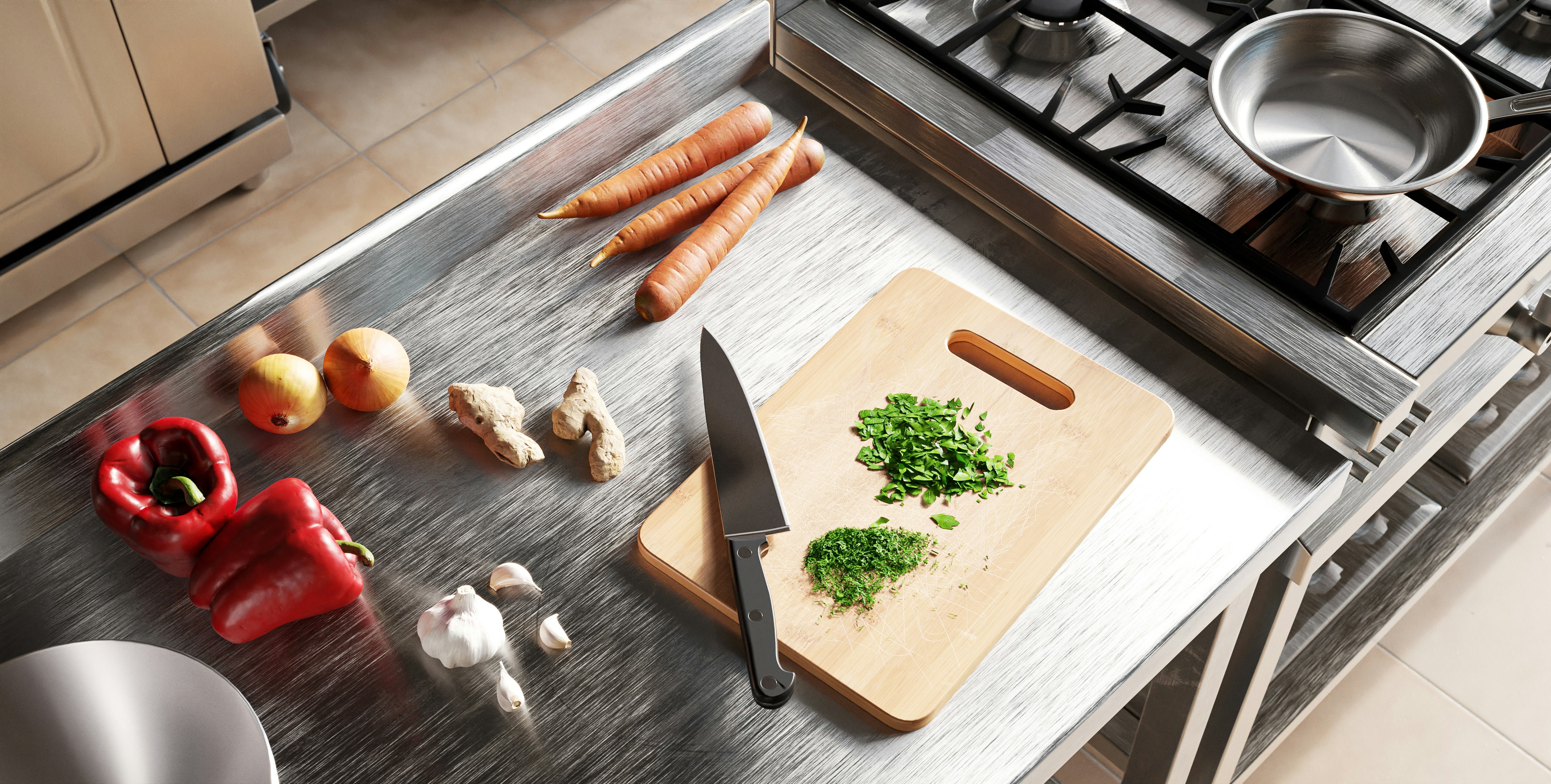
Getting the Most Out of Your Stainless Steel Cutting Board.
To truly unlock the potential of your stainless steel board and ensure a harmonious relationship with your knives, adopting the right habits is key. A few small adjustments in technique and care will make all the difference, allowing you to enjoy the benefits without any of the feared drawbacks.
Tips for proper knife technique, care, and maintaining your knives.
- Slice, Don't Chop: As mentioned earlier, this is the most critical rule. Use a smooth, gliding slice that draws the knife from heel to tip through the food. Let the blade's sharpness do the work. Avoid bringing the knife down with heavy, vertical force. This technique is not only better for the knife and board but also results in cleaner, more precise cuts.
- Ensure Stability: A bare stainless steel board can slide on a smooth countertop. To prevent this, either choose a model that has integrated non-slip silicone feet or edges, or simply place a damp paper towel or a thin, grippy silicone mat underneath the board. A stable board is a safe board.
- Hone Regularly, Sharpen As Needed: The slightly harder surface of stainless steel may cause the microscopic edge of your knife to roll a bit more quickly than on wood. This is easily corrected. Use a honing steel regularly—even a few strokes before each use—to realign the edge and maintain its "bite." Honing is not the same as sharpening; it's maintenance. You will still need to sharpen your knives to remove metal and create a new edge, but you may find that with regular honing, the need for full sharpening isn't significantly more frequent.
- Embrace the Sound: Yes, cutting on steel is louder than cutting on wood. The gentle "zing" or "shing" sound is part of the experience. Think of it as auditory feedback confirming your clean, hygienic prep work! Over time, you'll grow accustomed to it.
- Care is Simple: The beauty of stainless steel is its low maintenance. Wash with soap and hot water after each use. It's fully dishwasher safe for easy sanitization. For any stubborn spots or to restore its shine, a paste of baking soda and water or a designated stainless steel cleaner works wonders.
By following these simple tips, you can integrate a stainless steel cutting board into your kitchen workflow seamlessly, enjoying its unparalleled hygiene and durability while keeping your prized knives in excellent condition.
Dispelling Myths and Embracing the Future with Stainless Steel Cutting Boards
The kitchen is a space often steeped in tradition, and introducing a new tool, especially one that challenges long-held beliefs, can be met with skepticism. Stainless steel cutting boards have been the subject of numerous myths and misunderstandings, primarily concerning their effect on knives. However, as kitchen science and material engineering advance, it's time to clear up the confusion and recognize these boards for what they are: a smart, safe, and sustainable choice for the modern home cook.
Clearing Up Confusion: Not All Boards Are Created Equal.
A significant part of the confusion stems from the fact that not all metallic-looking cutting boards are the same. A negative experience with a cheap, poorly made product can unfairly tarnish the reputation of an entire category. Quality of material and thoughtful design are paramount.
Highlighting material quality and the importance of informed choices (e.g., some 'titanium' boards are actually stainless steel).
When you see a board marketed as "indestructible" or with flashy names like "titanium board," it's wise to be cautious. True titanium is very hard and would indeed be terrible for a knife's edge. Often, these are marketing terms for products that are either a lower grade of stainless steel or have a thin, and often misleading, titanium coating.
The gold standard for a knife-friendly stainless steel cutting board is food-grade 304 stainless steel. This specific alloy is chosen for its excellent corrosion resistance, durability, and, crucially, a hardness level that is carefully balanced to be softer than the high-carbon steel of a quality kitchen knife. When you buy from a reputable brand that is transparent about using 304 stainless steel, you are choosing a product that has been specifically engineered for this purpose. Making an informed choice means looking past the marketing jargon and focusing on the actual material being used. A fine scratch on your board is a good sign—it means the board is doing its job by being softer than your knife.

Why I Believe in Chopaid Stainless Steel Cutting Boards for Modern Kitchens.
After weighing all the evidence—the science of hygiene, the realities of blade mechanics, and my own hands-on experience—I have become a firm believer in the value of a high-quality stainless steel cutting board. It addresses the most significant shortcomings of its predecessors while introducing a level of cleanliness and durability that wood and plastic simply cannot match.
Understanding the overall value, long-term investment, and my personal satisfaction.
The initial cost of a quality stainless steel board may be higher than a basic plastic or wood board, but its value extends far beyond the price tag. This is a long-term investment in your kitchen's safety and efficiency. A plastic board should ideally be replaced every year or so as it becomes heavily scarred. A wooden board requires ongoing maintenance with oils and can fail if neglected or warped. A stainless steel board, however, is a buy-it-for-life product. It will not warp, crack, or need replacement. Over the course of a decade, the cost is significantly lower than repeatedly buying disposable plastic boards.
My personal satisfaction comes from the peace of mind it provides. Knowing that I am preparing food on a surface that is verifiably sterile gives me confidence in every meal I serve. The freedom from lingering smells, stubborn stains, and the nagging worry about hidden bacteria is liberating. For me, products like the ones offered by Chopaid represent the future of home kitchen hygiene. They combine intelligent material science with practical design to create a tool that is not only safer and more durable but also elevates the entire cooking experience. Investing in a tool that protects both your family's health and your valuable knives is one of the smartest decisions a home cook can make.
In Conclusion
To summarize, while the idea of a stainless steel cutting board might seem unconventional to some, the benefits for kitchen hygiene are undeniable and scientifically sound. Its non-porous surface provides an impregnable defense against bacteria, odors, and stains, making it the cleanest and safest option available. The concern over knife dulling, while valid with improper materials or technique, is largely mitigated by choosing a high-quality board made of softer, food-grade steel and adopting a smooth, slicing motion. With careful use and the right product, like the well-designed offerings from reputable brands, we can truly enhance our cooking environment.
For me, moving to a stainless steel cutting board was a deliberate choice for superior hygiene, unparalleled durability, and long-term value. It has streamlined my cleanup process and given me greater confidence in my food prep. I genuinely encourage you to reconsider what you look for in a cutting board and explore how this modern tool can transform your kitchen practices, too!
Frequently Asked Questions
1. Will a stainless steel cutting board really dull my expensive knives?
This is the most common concern, and the answer is nuanced: it depends on the quality of the board and your technique. A high-quality board made from food-grade 304 stainless steel is softer than the hardened steel of your knife. Fine scratches will appear on the board, not your blade, which is the intended outcome. However, if you use a heavy, vertical chopping motion (slamming the knife down), the impact will dull your knife faster than on a softer wood surface. By using a proper slicing motion and honing your knife regularly to realign the edge, you can use a stainless steel board with minimal impact on your blade's sharpness.
2. Are stainless steel cutting boards noisy to use?
Yes, they are audibly different from wood or plastic. You will hear a "shing" or "zing" sound as the knife glides across the surface. Many users find this to be satisfying auditory feedback, associating it with a clean and professional kitchen. While it might be noticeable at first, most people quickly get used to it. The sound is a small trade-off for the immense hygiene benefits.
3. How do I stop the board from slipping on my countertop?
This is a valid safety concern. A bare metal board on a smooth stone or laminate countertop can be slippery. There are two easy solutions. The first is to purchase a board that has this feature built-in, such as one with non-slip silicone feet or a full silicone border. The second, and more universal, solution is to place a damp paper towel or a thin, grippy silicone mat under the board before you begin cutting. This creates friction and holds the board securely in place.
4. Can I put my stainless steel cutting board in the dishwasher?
Absolutely! This is one of its major advantages. Stainless steel is completely dishwasher safe. The high heat and strong detergents of a dishwasher cycle will thoroughly clean and sanitize the board, something that can damage or warp a wooden board. Being able to confidently sanitize the board after cutting raw meat, poultry, or fish is a huge benefit for kitchen hygiene.
5. Is a stainless steel board definitively better than wood or plastic?
Each material has pros and cons, but for hygiene, durability, and longevity, stainless steel is objectively superior.
- Plastic is cheap but gets scarred easily, creating a breeding ground for bacteria, and needs frequent replacement.
- Wood is gentle on knives and has some natural antimicrobial properties, but it's porous, requires significant maintenance (oiling), and can warp or crack if not cared for meticulously. It can also harbor bacteria in deep cuts.
- Stainless Steel is non-porous (super hygienic), extremely durable, dishwasher-safe, and stain/odor-proof. The main trade-off is a harder surface that requires better knife technique. For a modern kitchen focused on safety and sustainability, stainless steel offers the best overall value and peace of mind.