How to Produce a Quality White Plastic Cutting Board: From Reliable Sourcing to Custom Finishing
Have you ever thought about what goes into making that reliable white plastic cutting board in your kitchen? It's more than just a piece of plastic; it's a tool designed for hygiene, durability, and performance. The journey from a simple polymer to a finished cutting board is one of precision, quality control, and a deep understanding of material science.
Join us as we pull back the curtain and show you the journey of producing a truly high-quality white plastic cutting board, from carefully selecting the right raw materials to adding those special custom finishes. This process ensures that every board is ready for the demands of a professional kitchen yet perfectly suited for the home cook.
We're excited to share our process, demonstrating how brands like Chopaid ensure every white plastic cutting board meets the highest standards for both professional chefs and home cooks alike. You will gain a new appreciation for this everyday kitchen essential and understand why choosing a quality board matters.
Finding the Best Building Blocks for Our White Plastic Cutting Board
The foundation of any superior product is the quality of its raw materials. For a white plastic cutting board, this is no exaggeration. The choice of plastic and the reliability of the supplier directly influence the board's safety, durability, and overall performance. It's a meticulous process that begins long before any manufacturing takes place.
Why choosing the right plastic material matters
Not all plastics are created equal, especially when it comes to direct contact with food. The material must be non-toxic, resistant to wear, and easy to sanitize. Making the wrong choice can lead to significant health risks, including bacterial growth in knife grooves and chemical leaching into food.
Food-grade polyethylene: The smart choice for our white plastic cutting board
The undisputed champion for plastic cutting boards is food-grade High-Density Polyethylene (HDPE). This material is specifically engineered to be safe for direct food contact. The very structure of HDPE gives it the properties needed for a high-performance kitchen tool. It has an exceptional strength-to-weight ratio, meaning it is durable enough to resist chipping, cracking, and warping without being unnecessarily heavy.
Perhaps its most crucial feature is its non-porous nature. Unlike wood, HDPE does not absorb moisture, which prevents bacteria, odors, and fungi from thriving within the material. This makes it an incredibly hygienic surface for preparing everything from fresh vegetables to raw meat. Furthermore, HDPE is prized for being gentle on knife blades while still being resistant to deep scratches. This balance ensures the longevity of both the cutting board and your expensive knives. When a manufacturer commits to using certified food-grade HDPE, they are committing to safety and quality.
Understanding different plastic types for superior white plastic cutting boards
While HDPE is the gold standard, it's helpful to understand how it compares to other common plastics. This knowledge reinforces why HDPE is the superior choice for high-quality cutting boards.
| Plastic Type | Key Characteristics for Cutting Boards | Suitability |
|---|---|---|
| High-Density Polyethylene (HDPE) | Non-porous, durable, chemical-resistant, knife-friendly, FDA-approved for food contact. | Excellent. The industry standard for safety and performance. |
| Polypropylene (PP) | Lightweight, stiff, good chemical resistance, higher melting point than HDPE. | Good. A viable alternative, though often slightly less durable and more prone to warping than thicker HDPE boards. |
| Low-Density Polyethylene (LDPE) | Softer and more flexible than HDPE, often used for squeeze bottles and bags. | Poor. Too soft for a cutting surface; it would score deeply and wear out quickly. |
| Polyvinyl Chloride (PVC) | Can contain harmful chemicals (like phthalates) that may leach into food; not typically recommended for direct food contact cutting surfaces. | Unsafe. Should be avoided for cutting boards due to health concerns. |
| Polycarbonate (PC) | Very strong and often transparent, but can contain BPA and is not as resistant to scratches or UV light as HDPE. | Not Ideal. The potential for chemical leaching and its hardness on knives make it a poor choice. |
This comparison makes it clear that for a white plastic cutting board designed for safety, durability, and hygiene, HDPE is the most intelligent and responsible material choice.
Partnering with trustworthy raw material suppliers
The quality of the raw material is only as reliable as the supplier who provides it. A manufacturer's supply chain is a critical component of its quality promise. Establishing strong, transparent relationships with suppliers is not just a business practice; it's fundamental to creating a product that is consistently safe and effective.
Our commitment to quality materials at Chopaid for every white plastic cutting board
At a company like Chopaid, the commitment to quality begins with a rigorous supplier selection process. This isn't a one-time decision but an ongoing partnership built on trust and shared values. Reliable manufacturers don't just place an order; they build strategic partnerships to ensure a consistent and reliable flow of premium materials. This involves:
- Thorough Vetting: Evaluating potential suppliers for their experience, financial stability, and reputation in the industry.
- Clear Communication: Establishing transparent channels for communication to align on long-term goals and quality expectations.
- Shared Vision: Working with suppliers who understand and are committed to the high standards required for food-contact products.
This collaborative approach ensures that the HDPE used in every cutting board is of the highest caliber, free from defects, and consistent from batch to batch.
Checking for certifications and industry standards
Trust is important, but verification is essential. To guarantee the safety and quality of the raw materials, it's crucial to verify supplier certifications and their adherence to globally recognized standards. These certifications are not just pieces of paper; they are proof that a supplier's processes and materials have been independently audited and approved.
Key certifications and standards include:
- FDA Compliance: The U.S. Food and Drug Administration has specific regulations (such as 21 CFR) for plastics intended for food contact. Materials must be proven not to leach harmful substances into food.
- NSF Certification: NSF International provides testing and certification for products that impact public health, including food equipment. An NSF-certified cutting board has been verified to be non-toxic, non-absorbent, and easy to clean.
- ISO 9001: This certification verifies that a supplier has a robust Quality Management System (QMS) in place, which promotes consistency and reduces the risk of defects.
- GFSI-Benchmarked Schemes: For food safety management, certifications recognized by the Global Food Safety Initiative (GFSI) indicate a supplier meets best practices.
A responsible manufacturer will always ask for the certificate ID and date of issuance and verify it directly with the certifying body's public database. This due diligence is a non-negotiable step in ensuring that every white plastic cutting board starts with a foundation of verified safety and quality.
The Art and Science of Manufacturing a Durable White Plastic Cutting Board
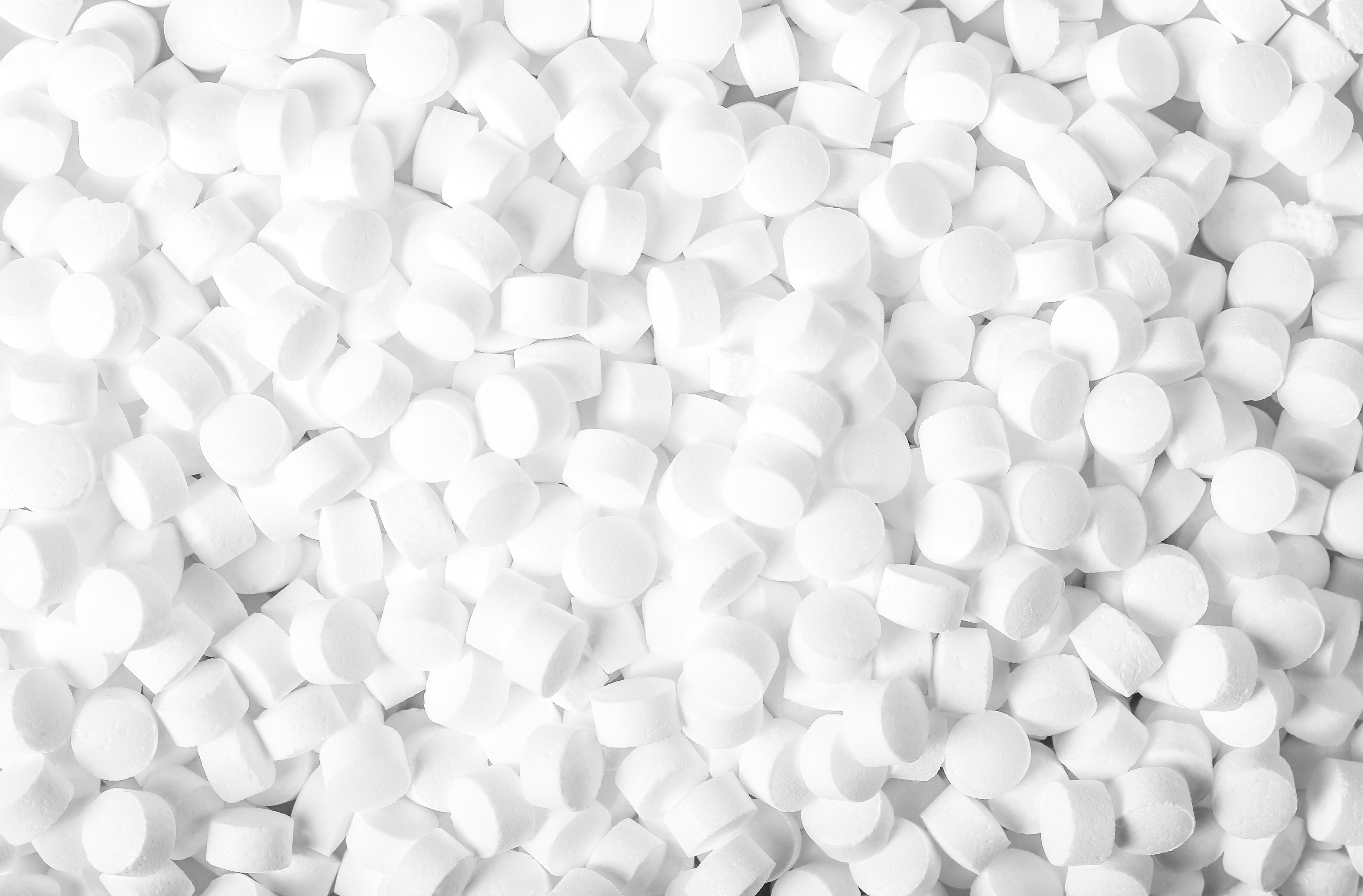
Transforming premium HDPE pellets into a finished cutting board is a process that balances artistry with advanced engineering. Every step, from the initial shaping to the final polish, is designed to maximize durability, hygiene, and performance. In modern factories, this involves a blend of high-tech machinery and skilled craftsmanship.
Precision cutting and shaping techniques
The first stage of manufacturing involves converting large sheets of HDPE into the familiar shapes of cutting boards. Accuracy is paramount here; even minor imperfections can compromise the board's integrity.
State-of-the-art machinery ensures perfection for each white plastic cutting board at Chopaid
Leading manufacturers like Chopaid rely on Computer Numerical Control (CNC) machinery to achieve flawless results. CNC routing and milling machines are programmed with exact dimensions, allowing for the creation of intricate designs and perfect shapes with high repeatability. This technology is critical for several reasons:
- Tight Tolerances: CNC machines can operate with dimensional accuracy up to ±0.05 mm, ensuring every board meets the exact design specifications.
- Consistency: By automating the cutting process, human error is virtually eliminated, guaranteeing that every board in a production run is identical.
- Versatility: This technology allows for easy production of various sizes and custom shapes, from small bar boards to large commercial-grade surfaces, without sacrificing quality.
The use of high-speed CNC routing ensures a clean, precise cut every time, laying the groundwork for a perfect finish.
Minimizing waste in white plastic cutting board production
Sustainable manufacturing is no longer an option—it's a necessity. Responsible producers are increasingly adopting "Smart Factory" models to reduce their environmental footprint. AI-optimized nesting software plays a crucial role in this effort by arranging the cutting patterns on a large HDPE sheet in the most efficient way possible. This intelligent layout maximizes the number of boards cut from a single sheet, drastically reducing material waste.
Furthermore, many factories implement closed-loop systems that recapture and reuse scrap materials from the cutting process, moving a step closer to zero-waste manufacturing. This not only benefits the environment but also improves cost-efficiency, making high-quality products more accessible.
Ensuring surface smoothness and hygiene
A cutting board’s surface is where it interacts with your food and knives, making its finish one of the most critical aspects of its design. The goal is to create a surface that is perfectly smooth, non-porous, and easy to sanitize.
Polishing and finishing for a perfect white plastic cutting board surface
After the boards are cut, they undergo a finishing process to create a flawlessly smooth surface. A rough or uneven surface can be difficult to clean and may harbor bacteria. Several methods can be employed:
- Mechanical Buffing: This traditional method uses a cloth wheel to abrade and smooth the plastic, resulting in a brilliant, shiny finish.
- Sanding: For a more uniform matte finish, fine-grit sandpaper can be used to gently level the surface and remove any minor imperfections from the cutting process.
- Flame Polishing: In this specialized technique, a hot flame is passed over the plastic's surface, which melts the material on a microscopic level to create an exceptionally clear and smooth finish. This requires a highly skilled operator to avoid damaging the material.
The chosen method depends on the desired final look and feel, but the objective is always the same: a perfectly sealed, non-porous surface that is ready for the kitchen.
Making our white plastic cutting boards easy to clean and sanitize
Hygiene is arguably the most important feature of a cutting board. The primary advantage of an HDPE white plastic cutting board is its non-porous surface, which does not absorb liquids, odors, or bacteria. This makes cleaning significantly more effective compared to porous materials like wood.
For proper sanitation, follow these steps:
- Initial Cleaning: After use, wash the board with hot, soapy water. Use a stiff nylon brush to get into any superficial knife marks and dislodge food particles.
- Dishwasher Safe: One of the biggest advantages of plastic boards is that most are dishwasher safe. A run on a hot cycle is one of the most effective ways to clean and sanitize the board.
- Manual Sanitizing: To sanitize without a dishwasher, you can soak the board in a solution of 1 tablespoon of unscented chlorine bleach per gallon of cool water for several minutes. Alternatively, a solution of white vinegar or a spray of 3% hydrogen peroxide can also be used as a natural disinfectant.
Always allow the board to air dry completely before storing it to prevent any lingering moisture from encouraging microbial growth.

Quality Control Every Step of the Way for Your White Plastic Cutting Board
A commitment to quality doesn't end once the product is made. It's an ongoing process of rigorous testing and verification to ensure every single white plastic cutting board meets and exceeds customer expectations and industry safety standards. This proactive approach is what separates a good product from a great one.
Rigorous testing for safety and longevity
A cutting board faces a demanding life in the kitchen, from heavy chopping to repeated washings. To ensure it can withstand this environment, manufacturers conduct a series of tests to validate its physical properties. These tests are designed to simulate real-world use and abuse, confirming the board's durability and long-term performance.
Impact and warp resistance tests for a resilient white plastic cutting board
Durability is a key selling point for HDPE cutting boards. They are engineered to be resistant to chipping, cracking, and warping. To verify this, manufacturers perform several quality checks:
- Impact Resistance Testing: Boards are subjected to impact tests to ensure they don’t crack or chip if accidentally dropped or struck. HDPE's inherent toughness makes it highly resistant to this type of damage.
- Warp Resistance Testing: Plastic can warp when exposed to high temperatures, such as those in a commercial dishwasher. Boards are tested for their thermal stability to ensure they remain flat after repeated high-heat washing cycles. HDPE boards are typically dishwasher safe up to 185°F (85°C). A thicker board, typically 0.75 inches or more, provides greater stability and resistance to warping.
These tests confirm that the cutting board will maintain its structural integrity and shape throughout its service life.
Checking for knife marks and overall durability
While no cutting board is completely immune to knife marks, a quality HDPE board is designed to resist deep scoring. It's a delicate balance; the material must be soft enough not to dull knives excessively, yet hard enough to prevent deep grooves where bacteria can hide.
Manufacturers perform tests to analyze:
- Knife Scarring: Boards are tested with various types of knives under controlled pressure to assess how deeply they score. The goal is a surface that shows minimal marking under normal use.
- Durability: The overall wear and tear on the board are evaluated over a simulated extended period. This ensures the board won't peel or degrade, maintaining a safe and hygienic surface. While minor scratches are inevitable, a high-quality board's surface can often be restored, extending its life.
Meeting industry standards and expectations for our white plastic cutting board
Beyond internal testing, adhering to established industry standards is a crucial part of the quality assurance process. This demonstrates a manufacturer's commitment to safety, consistency, and professionalism.
How Chopaid guarantees consistent white plastic cutting board quality
For a manufacturer like Chopaid, consistency is key. Achieving it requires a comprehensive Quality Management System (QMS) based on globally recognized principles. An ISO 9001 certification is the gold standard, providing a framework for ensuring quality at every stage. Key elements of this system include:
- Process Control: Establishing and documenting standardized procedures for every step of manufacturing, from material receiving to final inspection.
- Customer Focus: Actively gathering customer feedback to understand their needs and continuously improve the product.
- Continual Improvement: Regularly reviewing processes and performance data to identify opportunities for enhancement.
- Risk-Based Thinking: Proactively identifying potential risks to quality, such as supply chain disruptions or equipment failure, and implementing mitigation strategies.
This systematic approach ensures that every cutting board leaving the factory is of the same high quality.
Our internal quality assurance processes ensure excellence
Internal quality assurance (QA) is about preventing defects before they happen. It's a proactive mindset that is built into the manufacturing culture. In addition to ISO 9001, many food-equipment manufacturers implement principles from HACCP (Hazard Analysis and Critical Control Points).
For a cutting board, this means identifying critical control points where contamination could occur and implementing strict controls. This includes:
- Traceability: Using lot-controlled materials and clear line marking to ensure complete traceability from raw material to finished product.
- Regular Audits: Conducting both internal and external audits of processes and suppliers to ensure compliance with all standards.
- Final Inspection: Performing a final, thorough inspection of every board for dimensional accuracy, surface finish, and any visual defects before it is packaged.
This multi-layered QA process provides confidence that every product will perform safely and reliably in the customer's kitchen.

Personalizing Your White Plastic Cutting Board with Custom Finishing
A high-quality white plastic cutting board is more than a functional tool; it can also be a personalized statement piece for a kitchen or a powerful branding tool for a business. The versatility of HDPE allows for a wide range of custom finishes, turning a standard product into something unique.
Adding unique features and branding
Customization options enable businesses to create promotional items that are both practical and memorable, while home users can add a personal touch to their kitchen essentials. These features are typically added after the main manufacturing process but before final packaging.
Engraving and debossing options for a signature white plastic cutting board
Modern technology makes it simple to add intricate designs, logos, and text to an HDPE surface. This is a popular option for corporate gifts, restaurant branding, and promotional products.
- CNC Engraving: Utilizing the same precision CNC machinery used for cutting, intricate logos and text can be carved directly into the surface of the board. This creates a permanent, high-end look.
- Laser Engraving: A laser can be used to etch designs onto the board's surface. This method is excellent for fine details and offers a different aesthetic from CNC engraving.
- Debossing: This process uses a custom die to press a design into the plastic, creating an indented impression of a logo or brand name.
These methods allow for a high degree of personalization, making the cutting board a lasting reminder of a brand or a special gift.
Different sizes and thicknesses for versatile white plastic cutting boards
Not all cooking tasks are the same, and the ideal cutting board size and thickness can vary greatly depending on the use case. Manufacturers offer a range of standard and custom options to meet every need.
- Small Boards (e.g., 9" x 12"): Perfect for quick, small tasks like slicing a lemon for drinks, cutting cheese, or for use in kitchens with limited counter space.
- Medium Boards (e.g., 12" x 18"): This is often considered the most versatile and popular size for everyday home kitchen use, providing enough space for chopping vegetables or preparing a meal for a family without being cumbersome.
- Large Boards (e.g., 18" x 24"): Ideal for serious home cooks or professional chefs who need ample space for prepping multiple ingredients, carving large roasts, or filleting fish.
- Thickness: The thickness of a board impacts its stability and durability. Thinner boards (under 0.5") are lightweight but may be more prone to warping. Thicker boards (0.75" to 1") offer superior stability and longevity, making them a better long-term investment.
Offering a variety of sizes and thicknesses ensures that every user, from the casual cook to the professional chef, can find the perfect board for their needs.
Packaging and delivery considerations for your finished product
The final step in the production journey is ensuring the pristine, finished cutting board arrives at its destination in perfect condition. Thoughtful packaging not only protects the product but also reflects the brand's commitment to quality and, increasingly, sustainability.
Protecting your white plastic cutting board during transport
Flat products like cutting boards require packaging that protects them from scratches, impacts, and bending during shipping.
- Surface Protection: Each board is often wrapped in a thin layer of protective material, like foam sheets or paper, to prevent scuffs and scratches. Foam is particularly effective as it distributes pressure evenly and doesn't deflate.
- Structural Support: The wrapped board is then placed in a sturdy, flat shipping box, typically made from B-flute corrugated cardboard. This material is lightweight yet strong enough to resist bending and protect the board's edges and corners.
- Void Fill: If there is any extra space in the box, void-fill materials like crumpled paper or air pillows are used to keep the board from shifting during transit.
For larger or oversized boards, specialized carriers and packaging may be used to prevent damage, though sometimes cutting the board into more manageable sections can be a more practical solution for shipping.
Sustainable packaging solutions from Chopaid
As consumers and businesses become more environmentally conscious, the demand for sustainable packaging has grown significantly. Forward-thinking companies like Chopaid are moving away from single-use plastics and embracing eco-friendly alternatives.
- Recycled Materials: Using shipping boxes made from recycled materials, such as corrugated cardboard with a high percentage of post-consumer content, is a common practice.
- Plant-Based and Compostable Options: Innovations in packaging include compostable mailers, plant-fiber-based inserts, and even packaging made from materials like sugarcane or bamboo.
- Right-Sizing: Designing packaging that fits the product perfectly minimizes the need for excess void-fill materials and reduces the overall carbon footprint of shipping.
By investing in sustainable packaging, brands not only protect their products and the planet but also align with the values of their environmentally-aware customers.
Key Takeaways
Creating a top-tier white plastic cutting board is a detailed journey that prioritizes quality and safety from start to finish. It begins with the deliberate selection of food-grade High-Density Polyethylene (HDPE), a material renowned for its durability, non-porous surface, and resistance to bacteria. Forging strong partnerships with certified raw material suppliers who adhere to FDA and NSF standards is a crucial first step that lays the foundation for a superior product.
The manufacturing process itself is a blend of precision and hygiene. Advanced CNC machinery ensures every board is cut to exact specifications, while sophisticated polishing techniques create a perfectly smooth, easy-to-clean surface. Throughout this process, responsible manufacturers implement waste-reduction strategies, like AI-optimized cutting patterns and closed-loop recycling, to minimize environmental impact.
Finally, rigorous quality control and customization complete the process. Every board undergoes testing for impact and warp resistance, ensuring it can withstand the rigors of a busy kitchen. Adherence to international standards like ISO 9001 guarantees consistency and reliability. With options for custom sizes, thicknesses, and engraved branding, the final product is not just a tool, but a tailored kitchen solution that arrives in protective, often sustainable, packaging.
Frequently Asked Questions (FAQ)
Q: Why is High-Density Polyethylene (HDPE) the best plastic for cutting boards?
A: HDPE is the preferred material because it is non-porous, meaning it won't absorb liquids, odors, or bacteria like porous materials can. It is also durable, resistant to chipping and warping, gentle on knives, and can be certified as food-safe by regulatory bodies like the FDA and NSF.
Q: Are white plastic cutting boards safe to use?
A: Yes, when made from high-quality, food-grade HDPE, they are very safe. Reputable manufacturers ensure their materials are free from harmful chemicals like BPA and phthalates. The non-porous surface makes them easy to clean and sanitize, reducing the risk of cross-contamination.
Q: How do I properly clean and sanitize my white plastic cutting board?
A: For daily cleaning, use hot, soapy water and a scrub brush to clean the surface thoroughly. Most high-quality plastic boards are also dishwasher-safe for easy sanitization. For a deeper clean, you can use a solution of one tablespoon of bleach per gallon of water, or a spray of white vinegar or 3% hydrogen peroxide, followed by a thorough rinse.
Q: How often should I replace my plastic cutting board?
A: You should replace your plastic cutting board when it develops deep scratches or grooves that can't be easily cleaned. These deep cuts can harbor bacteria and become difficult to sanitize effectively. If the board becomes warped or heavily stained, it's also a good time to get a new one.
Q: Can I get a plastic cutting board in a custom size or with a logo?
A: Yes, many manufacturers offer customization services. Using CNC machines, they can create cutting boards in nearly any size or shape. They can also add logos, names, or designs through methods like CNC engraving or laser etching, making them great for promotional gifts or personalized kitchenware.
Conclusion
As we’ve seen, producing a quality white plastic cutting board is a journey of precision, care, and commitment, from its very origins to its final form. It's a dedication to creating a product that enhances your kitchen experience, a task that goes far beyond simply cutting a sheet of plastic. It’s about ensuring safety, hygiene, and durability are built into every fiber of the material.
By adhering to strict sourcing standards for food-grade materials, employing meticulous manufacturing processes powered by precision technology, and implementing rigorous quality control checks at every stage, we ensure every white plastic cutting board we make stands out in terms of quality and performance. The availability of personalized finishing touches further transforms this kitchen workhorse into a unique and valued item.
We hope this peek into our world has shown you why a truly great white plastic cutting board is an essential part of any kitchen, and why quality is always our top priority. The next time you reach for your board, you’ll know the immense effort and expertise that went into making it a reliable and safe tool for all your culinary adventures.