What Makes Anti-bacterial Plastic Cutting Boards Essential for a Safer Kitchen
Imagine a kitchen where every chop, slice, and dice is not just effortless, but also genuinely safe. We all strive for a clean and hygienic cooking space, yet hidden dangers like bacteria lurking on our cutting boards can silently compromise our best efforts. That's why understanding the pivotal role of your cutting surface, especially an anti-bacterial plastic cutting board, is so crucial for achieving true culinary peace of mind. Investing in the right tool is the first step toward a kitchen that is as safe as it is welcoming.
Key Takeaways
- Kitchen Contamination is a Real Threat: Common cutting boards can become breeding grounds for harmful bacteria like E. coli and Salmonella, leading to cross-contamination and foodborne illnesses.
- Active Protection: Anti-bacterial plastic cutting boards are made from non-porous materials infused with antimicrobial agents that actively inhibit the growth of over 99% of bacteria, providing a safer food prep surface.
- Essential Features Matter: When choosing a board, look for durability to resist deep knife scores, a knife-friendly surface that protects your blades, juice grooves to prevent spills, and non-slip features for safety.
- Smart Design Prevents Cross-Contamination: Using a reversible board—one side for raw meats and the other for produce—is a simple and highly effective strategy to keep your food safe.
- Proper Care is Key: Even the best boards require correct cleaning. Most high-quality anti-bacterial plastic boards are dishwasher safe for easy sanitization. It's crucial to replace your board when it develops deep scratches that can harbor bacteria.
- Make an Informed Choice: Select a cutting board that fits your specific culinary needs. Brands like Chopaid offer options designed for various tasks, ensuring you have the right tool for the job. Eco-conscious options made from recyclable plastics are also available.
Why an Anti-bacterial Plastic Cutting Board is Your Kitchen's First Line of Defense
Every meal begins on a cutting board, making it one of the most frequently used tools in any kitchen. But this central role also places it at the frontline of the battle against foodborne pathogens. While it may look clean, the wrong type of cutting surface can quickly become a hotspot for bacterial growth, undermining your efforts to maintain a safe and healthy kitchen environment. This is where the specific design and material of an anti-bacterial plastic cutting board become not just a convenience, but a critical line of defense for you and your family.
The Hidden Threat: Understanding Kitchen Contamination
The journey from fresh ingredients to a delicious meal is filled with potential pitfalls, and one of the most significant is cross-contamination. This occurs when harmful bacteria are transferred from one food item to another, typically via a contaminated surface like a cutting board. The Centers for Disease Control and Prevention (CDC) estimates that millions of people get sick from foodborne diseases each year in the United States alone.
Common culprits found in kitchens include Salmonella, E. coli, and Campylobacter, which are often present on raw meat, poultry, and seafood. When you chop these items on a cutting board, bacteria can be left behind. If you then use the same un-sanitized surface to slice vegetables for a salad, those dangerous microbes can easily transfer to your ready-to-eat food. Wooden cutting boards, while aesthetically pleasing, are particularly susceptible. Their porous nature allows moisture and bacteria to seep deep into the material, making them notoriously difficult to fully sanitize. Even with rigorous washing, bacteria can persist in the wood grain and in knife scars.

How Anti-bacterial Plastic Cutting Boards Offer Active Protection
This is where an anti-bacterial plastic cutting board fundamentally changes the game. Unlike their traditional counterparts, these boards are engineered for hygiene and offer a multi-faceted approach to safety.
First, their primary material is non-porous. High-quality boards are typically made from high-density polyethylene (HDPE) or polypropylene (PP), which do not absorb liquids or harbor bacteria in the same way wood or other porous materials do. This means that microbes, along with juices and food particles, stay on the surface, making them far easier to wash away completely.
Second, and most importantly, they feature built-in antimicrobial technology. This isn't just a surface coating that can wear off. During the manufacturing process, a silver-ion or other food-safe antibacterial agent is infused directly into the plastic. This agent works continuously to disrupt the cellular functions of bacteria that come into contact with the surface, effectively inhibiting their ability to multiply. Laboratory tests have shown that these surfaces can inhibit the growth of over 99.9% of harmful bacteria, providing active and lasting protection that a standard cutting board simply cannot offer. This active defense works around the clock, offering an extra layer of security and peace of mind.
Decoding the Best Anti-bacterial Plastic Cutting Board: Essential Features
Not all anti-bacterial plastic cutting boards are created equal. To ensure you're getting a tool that truly enhances kitchen safety and functionality, it's vital to look for a few key features. The best boards are a result of thoughtful design that balances durability, user safety, and practical, everyday usability. By understanding what to look for, you can choose a board that will serve you well for years to come.
Prioritizing Durability and Knife-Friendly Materials
A cutting board's material is its most important attribute, affecting everything from its longevity to the sharpness of your knives. The ideal board must be durable enough to withstand daily use without developing deep grooves, yet soft enough that it doesn't dull your expensive chef's knives.
High-density polyethylene (HDPE) and polypropylene (PP) are the materials of choice for professional-grade cutting boards for this very reason.
- Durability: These polymers are tough and resistant to chipping, cracking, and warping. A high-quality board will resist deep knife scoring, which is critical because deep gashes can trap food particles and bacteria, becoming impossible to clean properly.
- Knife-Friendly: A surface that is too hard, like glass or stone, will rapidly dull or even chip a knife's edge. HDPE and PP plastic provide a "self-healing" quality, where minor cuts tend to close up, and they offer just enough give to protect the blade's fine edge. This means your knives stay sharper for longer, making your prep work safer and more efficient.
The table below highlights the key differences between common cutting board materials:
| Feature | Anti-bacterial Plastic (HDPE/PP) | Wood/Bamboo | Glass/Stone |
|---|---|---|---|
| Porosity | Non-Porous | Porous | Non-Porous |
| Knife Friendliness | Excellent | Good to Fair | Very Poor |
| Sanitization | Easy (Dishwasher Safe) | Difficult (Hand-wash only) | Easy |
| Durability | High | Medium (Can crack/warp) | Brittle (Can shatter) |
| Antimicrobial | Built-in Active Protection | Natural (but limited) | None |
Safety First: Grooves and Non-Slip Design
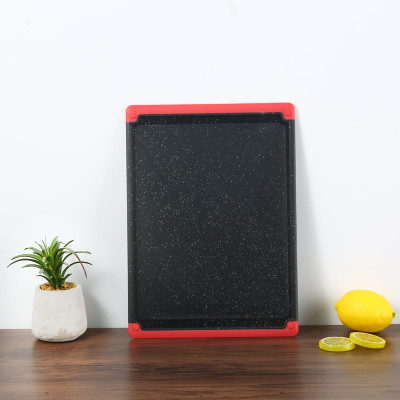
A secure and stable cutting surface is paramount for safety. A board that slides around on the countertop is a major hazard, increasing the risk of serious injury. The best anti-bacterial cutting boards incorporate features to address this. Look for boards with non-slip silicone or rubber feet at the corners. These grip the counter, ensuring the board stays firmly in place while you chop, slice, or pound.
Another crucial safety and cleanliness feature is a built-in juice groove, also known as a drip catcher. This is a small trench that runs around the perimeter of the board. Its purpose is to catch and contain liquids from ingredients like roasted meats, juicy tomatoes, or melons. This simple design element:
- Prevents Messes: Keeps countertops clean and dry.
- Enhances Safety: Prevents liquids from spilling onto the floor, reducing the risk of slips and falls.
- Improves Hygiene: Contains potentially bacteria-laden juices, preventing them from contaminating other surfaces.
Preventing Cross-Contamination with a Reversible Anti-bacterial Plastic Cutting Board
One of the golden rules of food safety is to use separate cutting boards for raw meats and ready-to-eat foods like fruits and vegetables. A reversible cutting board offers a brilliant and space-saving solution to this challenge.
A well-designed reversible board allows you to use one side exclusively for raw poultry, meat, and seafood, and the other side for produce, bread, and cheese. Some boards even feature subtle icons or different colored borders to help you remember which side is for which purpose. This simple habit drastically reduces the risk of cross-contamination. By pairing this feature with the board's inherent non-porous and anti-bacterial properties, you create a powerful system for maintaining a hygienic kitchen.

Maximizing the Lifespan of Your Anti-bacterial Plastic Cutting Board: Care and Replacement
Investing in a high-quality anti-bacterial plastic cutting board is the first step. The next is ensuring it performs at its best for its entire lifespan through proper care and timely replacement. Like any essential kitchen tool, a little maintenance goes a long way in guaranteeing both safety and performance. By following a few simple rules for cleaning and knowing when to say goodbye, you can maximize the return on your investment.
Optimal Hygiene: Cleaning Your Chopaid Anti-bacterial Plastic Cutting Board
The non-porous nature of plastic makes it significantly easier to clean than wood, but proper technique is still essential to ensure all food residues and bacteria are removed. One of the greatest advantages of boards like those from Chopaid is that they are designed to be dishwasher safe.
Dishwasher Cleaning (Recommended Method): For the most effective sanitization, place your board in the dishwasher after each use. The high-temperature water and detergents work together to kill any lingering bacteria. Ensure the board is placed so that it won't bend or warp during the high-heat drying cycle.
Hand Washing Steps: If you prefer to hand wash or don't have a dishwasher, follow these steps immediately after use:
- Rinse: Hold the board under hot running water to wash away loose debris.
- Scrub: Apply dish soap and use a clean brush or sponge to scrub the entire surface, paying special attention to any knife marks.
- Rinse Again: Thoroughly rinse with hot water to remove all soap and residue.
- Sanitize (Optional but Recommended): For extra protection, especially after cutting raw meat, you can sanitize the board. A simple solution of one tablespoon of unscented liquid chlorine bleach per gallon of water is highly effective. Let the solution sit on the board for several minutes before rinsing and air drying.
- Dry: Allow the board to air dry completely by standing it on its edge or placing it in a drying rack. Trapping moisture can encourage microbial growth, even on an anti-bacterial surface.
Spotting the Signs: When to Retire Your Anti-bacterial Plastic Cutting Board
No cutting board lasts forever. Over time, repeated use will inevitably lead to wear and tear. The greatest advantage of a plastic board—its knife-friendly softness—is also what eventually leads to its retirement. With continuous chopping and slicing, the surface will accumulate numerous knife scores and deep grooves.
While the anti-bacterial properties of the plastic are still present, these deep gashes can become problematic. They can trap tiny food particles and become very difficult to clean effectively, even in a dishwasher. When your board becomes heavily scarred, warped, or develops a perpetually stained appearance, it's time for a replacement.
Here are the key indicators that your cutting board needs to be retired:
- Deep, Numerous Grooves: If you can feel deep ridges and scratches across the surface that a brush can't easily clean.
- Warping: A warped board is unstable and unsafe to use.
- Permanent Stains: While some staining is normal, deep-set, widespread discoloration can indicate a compromised surface.
A good rule of thumb is to inspect your boards regularly and plan to replace them once they show significant wear. This proactive approach ensures your first line of defense in the kitchen remains strong and effective.
Making an Informed Decision: Finding Your Ideal Anti-bacterial Plastic Cutting Board
Choosing the right cutting board goes beyond just picking a color or size; it's about selecting a tool that aligns with your cooking style, kitchen workflow, and even your environmental values. With a clear understanding of what to look for, you can confidently select an anti-bacterial plastic cutting board that will become an indispensable part of your culinary toolkit.
Chopaid's Advice: Tailoring Your Choice to Your Culinary Needs
As experts in kitchenware, the team at Chopaid advises that the best cutting board is one that fits your habits. Consider the following to make the right choice:
- Size Matters: Do you typically cook large meals with lots of ingredients, or do you prefer simple, quick prep? A large board (e.g., 15 x 20 inches) is great for big jobs like carving a roast or chopping multiple vegetables at once, preventing countertop clutter. A smaller board, however, is perfect for quick tasks like slicing a lemon or mincing garlic, and is easier to handle and clean. Many households benefit from having a set of two or three different sizes.
- Task-Specific Features: If you frequently work with juicy meats or fruits, a board with a deep juice groove is non-negotiable. If kitchen space is at a premium, a board with a handle or hanging hole for easy storage is a practical feature.
- Weight and Handling: A heavier, thicker board tends to be more stable, but a lighter board is easier to move from counter to pot. Find a balance that feels comfortable and safe for you.
By assessing your personal needs, you can move beyond a one-size-fits-all approach and select a board that truly enhances your cooking experience.
Eco-Friendly Kitchens: Recyclable Anti-bacterial Plastic Cutting Boards
A common concern with plastic products is their environmental impact. Fortunately, many leading manufacturers are addressing this by using materials that are not only safe and durable but also recyclable. The high-quality HDPE (High-Density Polyethylene) and PP (Polypropylene) used in premium cutting boards are highly sought-after plastics for recycling.
- Check the Recycling Code: Look for the recycling symbol on the board or its packaging. HDPE is typically marked with a #2, while PP is marked with a #5. Most municipal recycling programs accept these types of plastics.
- A Responsible Lifecycle: By choosing a recyclable board, you are participating in a more circular economy. Once your board reaches the end of its life due to wear and tear, it can be properly recycled and repurposed into new products rather than ending up in a landfill.
Opting for a recyclable anti-bacterial plastic cutting board is a choice that benefits both your kitchen's hygiene and the planet. It demonstrates that safety and sustainability can go hand-in-hand, allowing you to make a responsible decision without compromising on quality or performance.
Frequently Asked Questions (FAQ)
Q1: Are anti-bacterial cutting boards really safer than regular plastic or wood ones? A: Yes, for two main reasons. First, they are made from non-porous plastic, which prevents bacteria from soaking into the material as it does with wood. Second, they are infused with antimicrobial agents that actively inhibit the growth of bacteria like E. coli and Staphylococcus on the surface, providing a continuous layer of protection that regular boards lack.
Q2: Will an anti-bacterial cutting board dull my knives? A: No, a high-quality anti-bacterial board made from materials like HDPE or PP is specifically designed to be knife-friendly. The surface has enough "give" to protect the fine edge of your knife, unlike harder materials such as glass, bamboo, or stone, which can quickly dull or even chip a blade.
Q3: How do I properly sanitize my anti-bacterial plastic cutting board? A: The easiest and most effective method is to wash it in a dishwasher. The high heat and strong detergents will sanitize it thoroughly. If washing by hand, scrub with hot, soapy water, then sanitize with a solution of one tablespoon of bleach per gallon of water. Let it sit for a few minutes before rinsing and air drying.
Q4: How often should I replace my plastic cutting board? A: You should replace your board when it develops deep knife grooves and scratches that are difficult to clean. These scores can trap food and bacteria, making the board unhygienic even with proper washing. If the board is warped, stained, or heavily scarred, it's time for a new one.
Q5: What is the benefit of a reversible cutting board? A: A reversible board is an excellent tool for preventing cross-contamination. You can designate one side for raw meat, poultry, and seafood, and the other side for ready-to-eat foods like fruits, vegetables, and bread. This simple practice significantly reduces the risk of transferring harmful bacteria.
Ultimately, investing in a high-quality anti-bacterial plastic cutting board is a small step that makes a monumental difference in your kitchen's overall safety and hygiene. By prioritizing these essential tools, we empower ourselves to cook with confidence, knowing we're protecting our loved ones from the risk of foodborne illnesses. So, make the switch today and experience the peace of mind that comes with preparing meals on a truly safe and clean cooking surface. Don't wait to elevate your kitchen's standard of safety—explore the options and find the perfect board for your home.