
Wholesale ChopAid Antibacterial best plastic cutting board | 10" X 15" with Non-Slip Feet and Juice Collector.
| Share | |
|---|---|
| Categories | Antibacterial Cutting Boards Wholesale |
| Brand | ChopAid Cutting Board Manufacturer |
| Product Specifications | 6645 |
| Material | TPE and polypropylene |
| Size | 37 × 25 × 1 cm |
| Thickness | 10 mm |
| Antibacterial additive | Arkshell, compounded into the polymer |
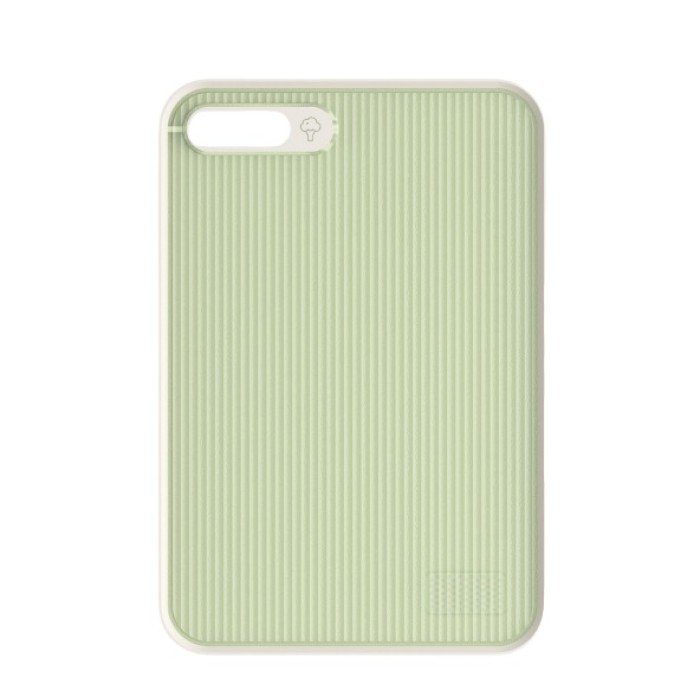
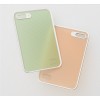
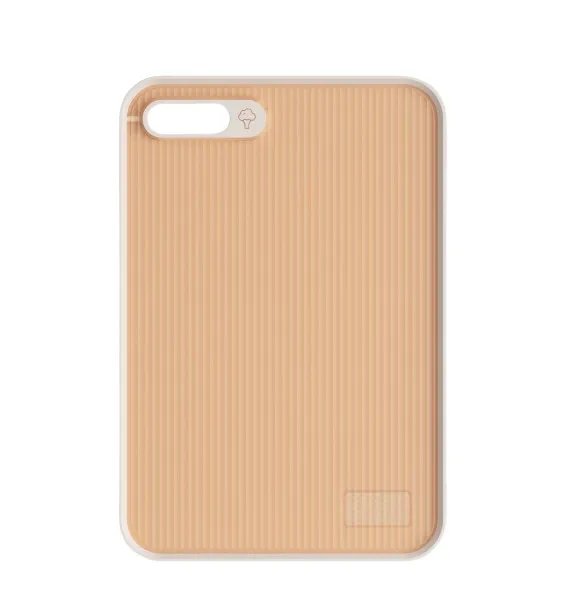
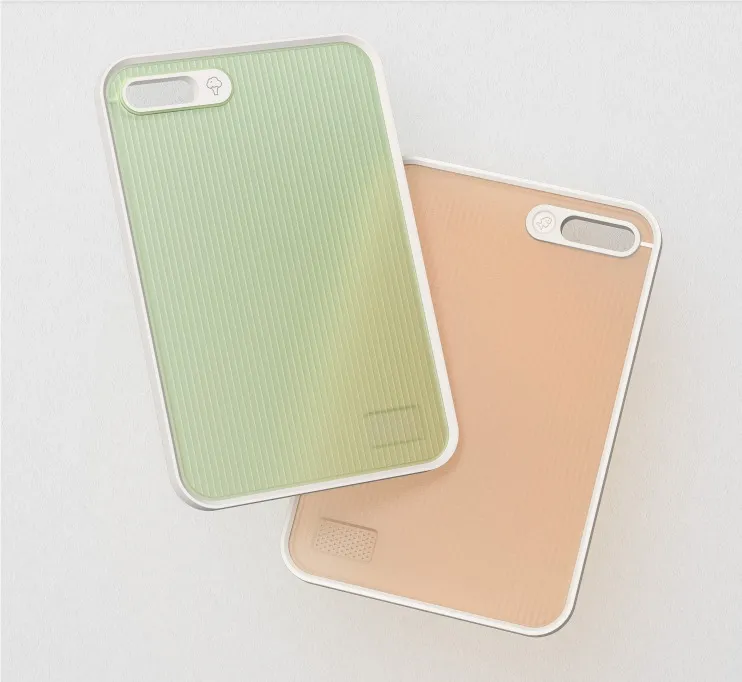
| Colour | Orange, green |
| Faces | One ribbed face, one flat matte face |
| Measuring scale | Moulded along the top edge |
| Grinding area | Recessed dotted panel, one end |
| Underside | Embossed non-slip pattern |
| Dishwasher | Yes |
| Certification | FDA, LFGB |
| Port | Shanghai or Ningbo |
| Terms of Payment | L/C, D/A, D/P, Western Union, MoneyGram, T/T, Paypal |
37 × 25 × 1 cm · model 6645 · orange and green
At 25 cm wide this is the narrowest board in the family, and that is the whole point of it. Most worktops are quoted at 60 cm deep; almost none of them offer 60 cm of clear surface once a hob, a sink and a coffee machine have taken their share. This board is sized for what is actually left.
It also carries two details the other models do not: a measuring scale moulded along the top edge, and a fine ribbed finish on one face. Both are small things that change how the board gets used, and neither appears in most listings.
- 37 × 25 cm
- 10 mm thick
- Measured edge
- Ribbed and flat faces
- Arkshell additive
- Dishwasher safe
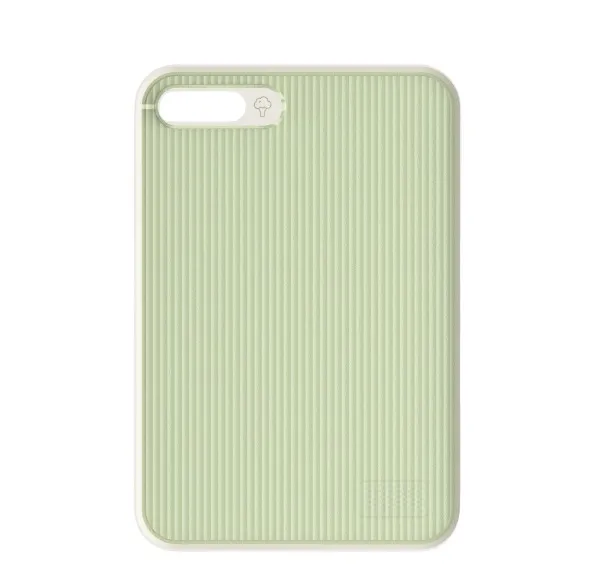
37 × 25 cm Is the Narrow Board
The difference between this board and the 40 × 30 model is not proportional, it is categorical. A 40 cm board needs a worktop with room to spare. A 37 × 25 board fits on the strip of counter left between the sink and the hob in a small flat, which is where most prep actually happens.
- 25 cm wide — narrow enough to leave 20 cm of clear counter in front of it on a standard 60 cm worktop, so there is somewhere to put the food once it is cut.
- 37 cm long — still long enough for a full bunch of spring onions, a baguette, or a fillet laid diagonally.
- Fits a sink — at 25 cm it drops into most single-bowl sinks for washing, which is how most boards are actually cleaned between tasks.
Where it stops is whole ingredients. A whole chicken will overhang this board, and half a watermelon will not sit on it at all. Buyers should treat this as the everyday board in a small kitchen, not as the board for breaking down a carcass.
The Scale Along the Top Edge
Moulded into the top edge of this model there is a short measuring scale, a row of graduated marks for sizing a cut rather than just making one. It is the least advertised feature on the board and the one that gets used without thinking once it is there.
- Even dice — cut a strip, then step it along the scale to get cubes of the same size instead of eyeballing each one.
- Bread and cheese — consistent slice thickness matters more than it sounds when the food is going on a plate for service.
- Portioning — useful in a small commercial kitchen where a cook is dividing a batch by eye.
It is a guide, not a precision instrument. Moulded marks carry normal tooling tolerance and the scale is short, so it is for consistency rather than measurement. Presenting it as a ruler would oversell it; presenting it as a guide is accurate and still useful.
The scale and the grinding area sit at opposite ends of the board. That placement is deliberate: it keeps the measured edge clear of the wet work.
Two Finishes on Two Faces
One face is finished with fine parallel ribs; the other is a flat matte surface. The ribs are not decorative. They break the contact patch between a wet ingredient and the board, so a tomato or a piece of fish is less likely to skate while it is being sliced, and liquid drains away from the cut instead of pooling under it.
The flat face is the opposite tool. It is the one to use when the food has to leave the board in one movement — scraping diced onion into a pan, or sliding a fillet into a tray. Ribs interfere with a sliding action; a flat face does not.
Grinding Area and Juice Collector
At one end of the board there is a small recessed area with a dotted texture — the grinding area, for garlic and ginger. It works the same way as the panel on the larger models: crush first, then work the piece across the dots to break down the fibres.
The juice collector is the channel formed between the working surface and the rim. On a board this narrow the channel is shorter than on a 40 cm model, so it holds less — enough for a tomato or a resting steak, not for a melon. It is worth being precise about that in a listing, because a buyer who expects a reservoir will complain and a buyer who expects a channel will not.
Arkshell: the One Model With a Named Additive
This is the only board in the family whose specification names its antibacterial additive: Arkshell, compounded into the polymer before moulding. Because the additive is in the material rather than on it, dishwashing does not strip it and knife marks do not expose untreated plastic underneath.
The performance figure quoted for it is 99.9 percent. That number only means something when it is tied to a test method — ISO 22196 or JIS Z 2801 are the usual ones — and to a specific material batch. Ask for the report rather than accepting the percentage on its own, and do not repeat the figure in a listing without it.
An antibacterial additive reduces bacterial growth on the surface. It does not sterilise food, it does not clean the board, and it does not replace washing after raw meat.
Specifications
| Model | 6645 |
|---|---|
| Size | 37 × 25 × 1 cm (approx. 14.6 × 9.8 in) |
| Thickness | 10 mm |
| Material | TPE and polypropylene |
| Antibacterial additive | Arkshell, compounded into the polymer |
| Colour | Orange, green |
| Faces | One ribbed face, one flat matte face |
| Measuring scale | Moulded along the top edge |
| Grinding area | Recessed dotted panel, one end |
| Juice collector | Channel between working surface and rim |
| Underside grip | Embossed non-slip pattern |
| Dishwasher | Yes |
| Certification | FDA, LFGB |
| Price | Quoted against specification, quantity and packaging |
| Port | Shanghai or Ningbo |
| Payment | T/T |
Who This Board Suits
Right for
- Small kitchens where clear worktop is the constraint
- Buyers who want even cuts without reaching for a ruler
- Retail pairs in orange and green for raw and ready-to-eat
- Anyone who needs a board that drops into a single-bowl sink
Wrong for
- Breaking down whole poultry or large fish
- Buyers wanting a board that holds a watermelon's juice
- Kitchens with generous worktop that would rather have 40 × 30
- Anyone expecting the scale to measure to laboratory tolerance
Ordering and Customisation
Orange and green are stock colours. A custom shade has to be agreed as a compounded colour because the material is coloured throughout, and that carries a higher minimum than either stock option.
Logo placement works best on the flat face, away from the scale and the grinding area. Printing over either interferes with a moulded feature that the customer is paying for.
Price is quoted against the specification rather than listed, because colour, packaging and quantity all move it. Send the configuration and a written quotation follows.
Frequently Asked Questions
What are the marks along the top edge for?
They are a measuring scale for sizing cuts — even dice, consistent bread slices, portioning by eye. They are moulded marks with normal tooling tolerance, so they are a guide for consistency rather than a precision ruler.
Is the juicing channel deep enough for a watermelon?
No. On a 25 cm wide board the channel holds enough for a tomato, a few fillets or a resting steak. It interrupts liquid on its way off the board rather than storing it.
Does the ribbed face make the board harder to clean?
It needs a rinse before dishwashing, particularly after mincing, because fine particles sit in the ribs. The board is dishwasher safe and the ribs do not trap anything that a normal cycle will not clear.
What is Arkshell and is the 99.9 percent figure reliable?
Arkshell is the antibacterial additive compounded into this board's polymer. The 99.9 percent figure is only meaningful against a named test method and a specific material batch, so ask for the test report rather than quoting the number alone.
Can the board be used on both sides?
Yes, and the two faces do different jobs — ribbed for wet or slippery ingredients, flat for sliding food off the board in one movement.
What is the minimum order quantity?
Stock orange and green carry one minimum; a custom compounded colour carries a higher one. Packaging format affects it as well. Send the configuration for a specific figure.
Sizing a board for a small worktop?
Send the clear counter dimensions and the colour mix you need. A quotation with sample timing comes back the same way.
Request a quote and sampleOEM and ODM welcome · FOB Shanghai or Ningbo · T/T


- Name
- Phone
- *Title
- *Content