Wheat Straw Cutting Board: Safe? 7 Best Options (2026)
As someone deeply invested in creating a healthy and sustainable kitchen environment, I've seen firsthand the confusion and concern around choosing the right cutting board. Many of us are unknowingly introducing harmful chemicals and microplastics into our food with traditional options. My journey led me to explore a multitude of materials, and I quickly realized that not all cutting boards are created equal, especially when it comes to long-term health and environmental impact. That's why I want to share my insights on the safest and most eco-friendly choices available.
Today, I'm specifically excited to dive into the world of Wheat Straw cutting boards, a rising star in sustainable kitchenware, and explore whether they truly live up to their promises for a non-toxic and environmentally conscious home.
Key Takeaways
- Plastic Dangers Are Real, But They Vary: Conventional plastic boards can release large numbers of microplastic particles and, in cheap grades, contain BPA or phthalates. Deep scratches also harbour bacteria. The severity depends on the polymer, the additives used, and whether any antimicrobial function survives scratching.
- Beware of Binders: Many eco-friendly-marketed boards, including some bamboo and wheat straw options, use adhesives that may contain formaldehyde, a known carcinogen. Always look for brands that are transparent about using food-safe, formaldehyde-free binders.
- Not All Wheat Straw is Equal: A wheat straw board is a composite: straw fibre bound in a polymer, usually polypropylene. It is not biodegradable, and that is the honest starting point. What separates a good one from a bad one is the straw load, whether the base resin is virgin food-grade PP or regrind, and whether the antimicrobial agent is compounded into the polymer rather than sprayed on top.
- The Standard That Actually Predicts Safety: Not the percentage of plants on the label, but four things you can verify: food-contact certification (FDA, LFGB), virgin rather than recycled base resin, no BPA or phthalates, and a surface dense enough to resist deep grooves in the first place. A board can be 100% plant-based and still fail all four.
- Every Material Is a Trade-Off: Hardwood is kindest to knives and can last decades, but it needs oiling, cannot go in a dishwasher, and cracks if left wet. Bamboo is cheap and hard, which is why it dulls edges faster. Steel never harbours bacteria but is brutal on an edge. There is no material that wins on every axis, only a material that fits how you actually cook.
- Proper Maintenance is Crucial: Regardless of the material, proper cleaning, disinfecting, and occasional maintenance (like oiling for wood boards) are essential for ensuring the hygiene and longevity of your cutting board. Know when to replace a board that has become excessively worn or grooved.
The 7 Cutting Board Materials, Compared Honestly
The title of this guide promises seven options, so here they are, side by side. Nobody sells all seven, including us. Read the column that matters to you rather than the verdict.
Swipe the table sideways for the full comparison.
| Material | What it sheds | Knife feel | Care and lifespan | Verdict |
|---|---|---|---|---|
| 1. Virgin PP / HDPE plastic | Microplastics from day one; more as it scars | Medium, firm | Dishwasher safe; 1 to 2 years of daily use | Cheap and hygienic when new, disposable by design |
| 2. Wheat straw + PP composite | Lower plastic volume per board, not zero; shedding reduced if the surface stays dense | Medium-soft, kinder than rigid PP | Dishwasher safe; 2 to 4 years | The honest eco option: less plastic, still plastic, needs a good grade |
| 3. 100% plant-fibre, plastic-free | No synthetic particles, but fibres and binder dust | Soft | Hand wash only; warps in heat; 1 to 2 years | Best story, weakest durability. Buy it as a statement, not a workhorse |
| 4. Hardwood (maple, walnut, end grain) | Nothing synthetic | Best in class, especially end grain | Oil monthly, never dishwasher, will crack if soaked; 10 years and up | Superb if you will maintain it, a mould trap if you will not |
| 5. Bamboo | Nothing synthetic; adhesives are the question mark | Harder than hardwood, dulls edges faster | Hand wash, oil occasionally; 2 to 5 years | Cheap and renewable, but ask what glue holds it together |
| 6. Stainless steel | Nothing; no pores at all | Harsh. The worst surface for an edge | Indestructible, dishwasher safe; 20 years and up | The hygiene answer for raw protein, never your main chopping board |
| 7. Paper-composite (Richlite type) | Nothing synthetic in the food-contact sense | Good, wood-like | Dishwasher safe; 10 years and up | Genuinely good, genuinely expensive, rarely stocked outside North America |
Understanding the Pitfalls: Where Each Material Actually Goes Wrong
The Hidden Dangers of Plastic and Other Problematic Boards
The journey to a non-toxic kitchen often starts with re-evaluating the most common items we use daily, and the plastic cutting board is a primary offender. While convenient and cheap, these boards pose significant risks that are becoming increasingly clear.
The most alarming issue is the shedding of microplastics. A peer-reviewed study highlighted in Environmental Science & Technology found that common chopping activities on polyethylene and polypropylene boards can release tens of millions of microplastic particles directly into our food each year. One estimate suggests that preparing food on these boards could lead to an annual exposure of 7.4 to 50.7 grams of microplastics—equivalent to the weight of several credit cards. Although research into the long-term health effects is ongoing, scientists have already detected microplastics in human blood, lungs, and even arterial plaque, linking them to inflammation, hormone disruption, and cardiovascular issues.
Beyond microplastics, there is the danger of chemical leaching. Many plastic cutting boards are made with industrial chemicals like Bisphenol A (BPA) and phthalates. These substances are known endocrine disruptors, meaning they can mimic hormones in the body and potentially lead to reproductive problems, developmental issues in children, and even certain types of cancer. While some products are labeled "BPA-free," manufacturers may simply substitute BPA with other, less-studied bisphenols that carry similar risks.
Finally, the physical nature of plastic makes it a breeding ground for bacteria. Every knife cut creates grooves and scratches on the surface. These imperfections are nearly impossible to clean completely and become safe havens for harmful bacteria like Salmonella and E. coli, especially after preparing raw meat. Over time, even a dishwasher may not effectively sanitize a heavily scored plastic board, increasing the risk of cross-contamination and foodborne illness.
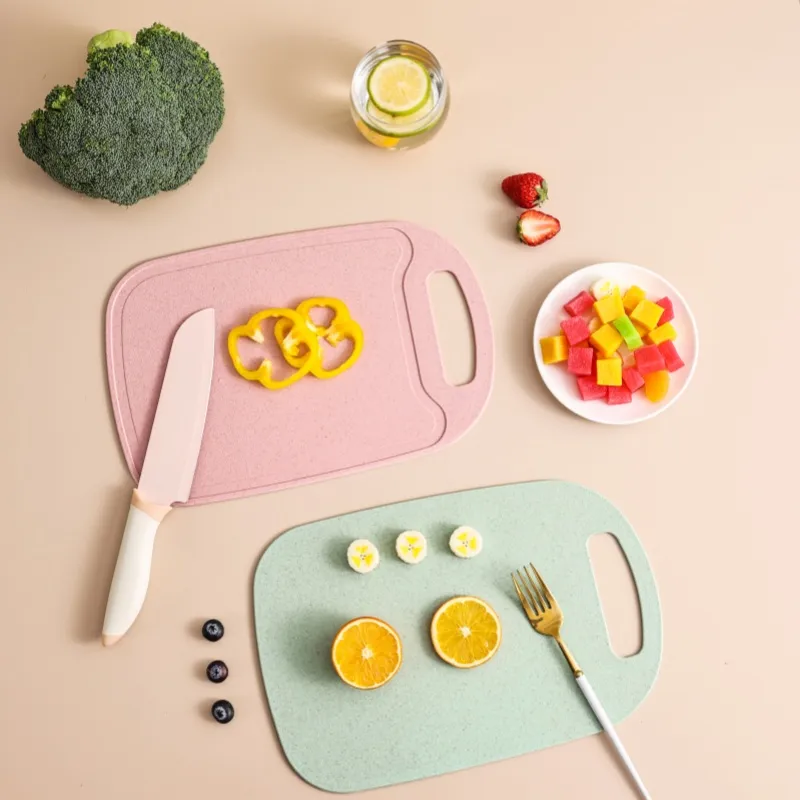
About 30% wheat straw. The other 70% is where quality lives.
Our wheat straw boards run roughly 30% straw by weight in virgin food-grade PP, with the silver-ion antimicrobial agent compounded into the polymer rather than sprayed on top. FDA and LFGB food-contact certified, tested to 99.9% against E. coli and S. aureus, and rated for 10,000+ cutting cycles. Ask us for the resin grade and the test reports.
See the wheat straw range →Factory direct · FDA and LFGB food-contact grade · OEM and ODM welcome
Unmasking Toxic Adhesives and Finishes in Some Cutting Boards
The material of the cutting board is only one part of the safety equation. What holds it together and what it's coated with can introduce a host of new, hidden dangers into your kitchen. This is especially true for engineered products like bamboo, composite, and even many wood cutting boards.
A significant concern is the use of adhesives containing formaldehyde. Many bamboo cutting boards, for instance, are made by gluing together strips and fibers of bamboo. Some of these products use glues that contain formaldehyde, a volatile organic compound (VOC) and known human carcinogen, which can potentially leach into food over time. While many reputable manufacturers now use non-toxic, food-safe glues, cheap, mass-produced boards often lack transparency about the adhesives used, leaving the consumer at risk. These glues can also include epoxy, which may contain BPA, and other resins that are not intended for food contact.
The finish applied to a cutting board is another critical factor. The most common treatment for wooden boards is food-grade mineral oil. While the FDA generally considers it safe for incidental food contact, it's important to know that mineral oil is a byproduct of petroleum distillation. Studies have indicated that mineral oil hydrocarbons are a significant contaminant in the human body, and some research suggests a potential for endocrine disruption. Many people understandably prefer to avoid rubbing a petroleum product on their food preparation surfaces.
Alternative finishes like raw linseed oil, pure tung oil, and beeswax are excellent natural options. However, it's crucial to distinguish them from their commercial, non-food-safe counterparts. For example, "boiled" linseed oil contains metallic driers that are toxic and should never be used on a surface that touches food. Similarly, many products labeled "Tung Oil Finish" are actually varnishes containing a variety of synthetic chemicals and only a small amount of actual tung oil. True safety lies in using 100% pure, food-grade oils. Without clear labeling and transparency from the manufacturer, it's difficult to know if the finish on your board is truly non-toxic.
What a Wheat Straw Board Really Is, and the Three Numbers That Separate Good from Bad
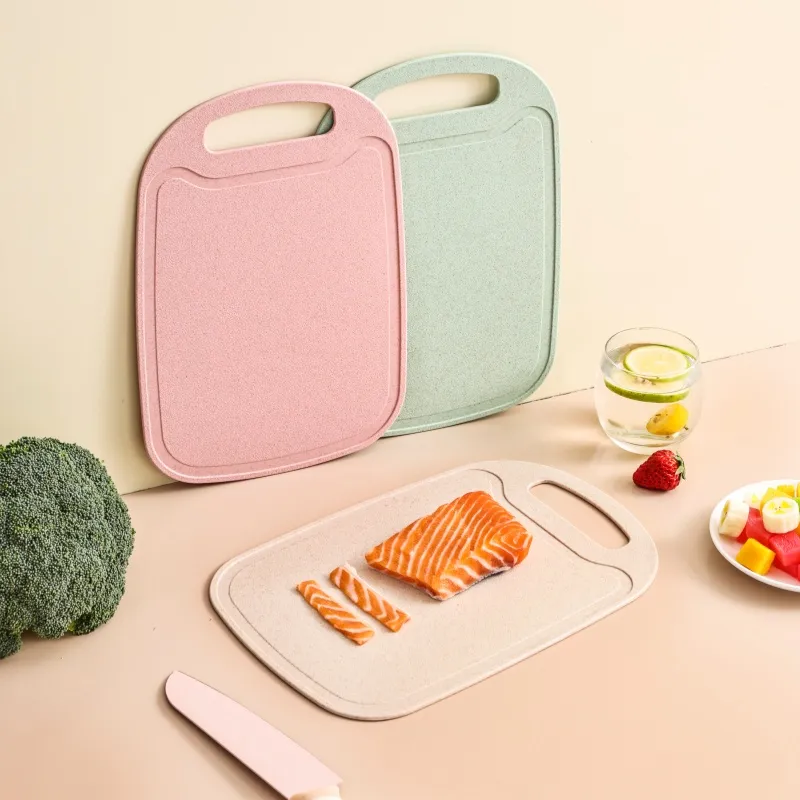
Wheat straw boards exist for a good reason: wheat straw is agricultural waste, and putting it into a durable product displaces some virgin plastic. That much is true and worth buying into. The problem is that the category is completely unregulated, so a board with 30% straw in virgin food-grade PP and a board with 5% straw swept off a factory floor both get to print the same words on the box. Three numbers separate them.
One: the straw load. Almost every wheat straw board on the market is a composite, straw fibre bound in a polymer, usually polypropylene. Typical commercial boards run 20 to 40% straw by weight. Ours run about 30%. Ask for the percentage, and be suspicious of any brand that cannot answer: unstated usually means under 10%. The straw load is the whole point of the material, because it is the fraction of the board that is not petroleum.
Two: the base resin. This is where quality actually separates. Virgin food-grade PP is inert and predictable. Regrind, meaning reprocessed scrap plastic, is cheaper and is what turns up in boards sold at import-market prices. Regrind can carry residues from whatever it was in its first life, and no amount of wheat straw on the label makes up for it. Food-contact certification such as FDA or LFGB is the paper trail you want to see here.
Three: whether the board stays dense. A wheat straw composite that holds its surface resists deep grooves, and a board without deep grooves has nowhere for bacteria to hide and sheds far less material. Thin boards, under about 8 mm, flex under the knife, score faster and wear through sooner. Density and thickness are what you are paying for when you pay more.
Then there are the three criticisms that get aimed at the category, and they deserve straight answers rather than marketing.
It is not biodegradable. Correct, and no manufacturer should imply otherwise. A wheat straw composite will not break down in a home compost bin. What it does do is use roughly a third less petroleum than an all-plastic board of the same size. Whether that is meaningful depends on how long you keep it, which is why the durability numbers further up matter more than the compostability claim.
Additives can leach. A real concern, and the reason melamine-based boards should be avoided for hot or acidic food. Food-grade polypropylene is a different material with a long history of food contact, and the risk profile is not comparable. This is a case where the specific resin matters far more than the category.
It still sheds microplastics. Also true, and worth saying plainly: a wheat straw board is not a plastic-free board. It contains less plastic and it holds its surface longer than a cheap all-plastic board, so it sheds less over its life, but less is not none. If zero plastic is your hard requirement, choose hardwood, steel or paper composite from the table above, and accept what each of those asks of you in return.
One more thing worth knowing before you buy: a 100% plant-fibre board with a plant-based binder does exist, and it is the honest answer to the microplastic question. It is also the worst performer in the table, because a board with no polymer in it absorbs moisture, warps in a dishwasher and typically lasts a year or two. That is not a reason to avoid it. It is a reason to stop pretending that one material is simply better than another instead of better at something.
My Criteria for a Truly Non-Toxic and Sustainable Chopaid Wheat Straw Cutting Board
After navigating the complex and often misleading world of cutting boards, I've established a firm set of criteria for what constitutes a truly safe, sustainable, and high-performing option. It’s not enough for a product to simply be labeled "eco-friendly"; it must prove its worth through its composition and performance. This is the standard I apply when evaluating any kitchenware, including promising options like those from Chopaid.
Naturally Derived and Food-Grade Materials for Chopaid Wheat Straw Cutting Boards
The criterion that actually predicts safety is not how plant-based a board is. It is whether every layer of it passes food-contact regulation and stays that way in use. A board can be entirely plant-derived and still be a bad cutting surface; a board can be a composite and still be inert, dense and certified. Judge the specification, not the story.
Food-grade is the floor, not the ceiling. It means a regulator has accepted the material for direct food contact. It does not tell you whether the board will still be safe after two years of knife work, and it says nothing about the additives. So ask two follow-up questions: is the base resin virgin or regrind, and is the board certified to FDA or LFGB as a finished product rather than only as a raw material. Those two answers separate a board built to a specification from a board built to a price.
On the microplastic question specifically, the only honest claim a composite maker can make is relative: less plastic, and less shedding over the board's life because the surface stays dense. We can show the straw load, the resin grade, the certification and the wear testing. We cannot claim zero plastic, because the board contains polypropylene, and a guide that hides that is not worth reading. What we can say is that a 30% straw board in virgin food-grade PP, with the antimicrobial agent compounded into the polymer, is a materially different product from a 5% straw board in regrind, even though both say wheat straw on the label.
The Importance of Transparency in Adhesives and Finishes for Chopaid Wheat Straw Cutting Boards
Transparency about binders and finishes matters most for engineered boards, which is exactly the category a wheat straw board belongs to. Here is what a manufacturer should be willing to put in writing, and what it means when they will not.
When it comes to adhesives, particularly in engineered boards like bamboo or composites, full disclosure is non-negotiable. Many of these products are pieced together with glues, and without transparency, it's impossible to know if they contain harmful substances like formaldehyde. I specifically look for brands that explicitly state they use formaldehyde-free, food-safe glues. Labels claiming a product is "food-grade" are not sufficient, as this doesn't always account for the safety of the binders when cured and in direct contact with food preparation.
Third-party certifications provide a crucial layer of trust. The NSF/ANSI 51 certification is a key benchmark. This standard sets public health and sanitation requirements for materials used in commercial food equipment, including cutting boards, sealants, and gaskets. A product with NSF/ANSI 51 certification has been tested to ensure that its materials will not contaminate food or make the equipment difficult to clean. An NSF mark provides confidence that a product meets rigorous safety and quality standards recognized across North America and worldwide.
The same level of scrutiny applies to finishes. Any oil, wax, or coating should be clearly identified as 100% pure and food-safe. A "special lacquer" or "protective resin" is a red flag unless the manufacturer provides complete details on its chemical composition and safety certifications. By prioritizing companies that are open about their entire material list, from fiber to finish, we can make an informed choice and avoid bringing unintended toxins into our kitchens. That is the standard we publish because buyers ask us for it, and because a specification you cannot state is usually a specification you do not have.
Prioritizing Durability and Knife-Friendliness in Chopaid Wheat Straw Cutting Boards
A cutting board is useless if it doesn't perform well under the daily pressures of a busy kitchen. Beyond just being non-toxic, a superior cutting board must strike a critical balance between durability and being gentle on your knives.
Durability. A board has to survive daily use without warping, cracking or developing grooves deep enough to hide bacteria. For a wheat straw composite, that comes down to thickness and surface density rather than the straw percentage. Our boards run 1.0 to 1.8 cm depending on the model, which is thick enough that the surface does not flex under a knife, and flex is what starts the scoring cycle. Under normal home use that puts replacement at two to four years, not the twelve to eighteen months that thin commodity boards achieve. Judge any board on its thickness spec and wear rating rather than on its material story.
Knife-friendliness. This is the other side of the durability coin. Glass, stone and ceramic are the extremes to avoid: hard surfaces that roll an edge and are unforgiving to a dropped knife. The useful middle ground is a surface with some give. Wood and bamboo are popular for exactly that reason, and on a composite board the equivalent is a soft TPE cutting face rather than a rigid filled PP sheet. We publish which of our boards use a TPE face precisely because it changes how the board treats your knife.
When evaluating a wheat straw cutting board, the goal is to find one that is dense enough to resist excessive scratching but is not so hard that it damages your cutlery. A board's surface should not feel like rock; it should yield slightly under the pressure of a blade. This ensures that the primary investment you've made in your knives is protected, making food prep safer and more enjoyable. Products that are thoughtfully engineered to be both durable and kind to knives represent the highest standard in cutting board design.
Exploring Top Contenders: Beyond Just Wheat Straw Cutting Boards
Where Wood and Bamboo Genuinely Win
We manufacture plastic boards, so take this section with the appropriate scepticism, but it would be a bad guide if it pretended wood had no case. It does, and the case is narrower than the marketing suggests.
What FSC Certification Actually Guarantees
For edge retention, a quality hardwood board is very hard to beat. Maple, walnut and cherry sit in the sweet spot: hard enough to take daily chopping, soft enough that the blade sinks slightly instead of skating.
Performance: Hardwoods have a tight grain structure that resists deep scratches and has natural antimicrobial properties; studies have shown that bacteria can sink into the wood fibers and die off as the board dries. Many high-quality end-grain boards are also described as "self-healing," as the wood fibers can part for the knife and then partially close back up, preserving both the board and the knife's edge.
- Maple: Often considered the industry standard, maple is extremely durable, dense, and has fine pores that resist bacteria. Its hardness is ideal for heavy use.
- Walnut: Softer than maple, walnut is prized for being gentler on knife edges and for its rich, dark color that beautifully hides stains.
- Cherry: Cherry offers a great middle ground, known for its beautiful reddish hue that deepens with age. It is slightly softer than maple, providing a good cutting surface that is kind to knives.
Sustainability: The key to choosing a truly eco-friendly wood board is looking for FSC certification. The Forest Stewardship Council (FSC) is a global organization that guarantees the wood comes from a responsibly managed forest that provides environmental, social, and economic benefits. Choosing an FSC-certified product ensures you are supporting sustainable forestry and not contributing to deforestation.
Bamboo: Rapidly Renewable, But with Caveats
Bamboo has surged in popularity as an "eco-friendly" material due to its rapid growth and renewability—it's technically a grass that matures in just a few years, compared to decades for hardwoods.
Pros: Bamboo boards are typically durable, lightweight, affordable, and less porous than some woods, making them resistant to moisture. Its hardness means it resists knife scarring well, and it has some natural antimicrobial properties.
Cons & Caveats:
- Hardness: Its high density and silica content can be tough on knives, potentially dulling them faster than a softer hardwood like walnut.
- Adhesives: Like many wheat straw boards, most bamboo boards are constructed by laminating and gluing together strips of bamboo. This raises concerns about the use of formaldehyde-based adhesives, which can be toxic. It is crucial to find brands that explicitly use certified formaldehyde-free, food-safe glues.
- Sustainability: While bamboo itself is a sustainable resource, the environmental benefits can be offset by the carbon footprint of shipping it from Asia, where it is primarily grown.
So both hardwood and bamboo are workable, if you accept the maintenance and if you check the glue. Neither is a shortcut past the questions above; they just move the questions from resin to adhesive.
Paper Composite, and the Rest of the Field
One more category deserves a mention even though we do not make it, because it is the strongest answer to the microplastic question that is not wood.
Paper composite, sold as Richlite and used in Epicurean boards, is the strongest non-wood answer to the microplastic question. Layers of FSC-certified craft paper are compressed with a food-safe phenolic resin into a dense sheet that absorbs nothing, gives bacteria nowhere to live, survives a dishwasher and takes heat to 176 C. It is a genuinely good material, and it is worth knowing the trade you are making:
The wider trend in the category is the same one driving wheat straw boards: replace as much petroleum as possible without giving up the properties that make a polymer useful on a cutting surface. Recycled plastic blended with sugarcane, mineral-filled composites, fibre-reinforced boards: they are all variations on reducing the plastic fraction. Which one is right for you depends on the four numbers, not on which plant is printed on the box.
We do not make paper composite and we are not going to pretend it suits everyone. It is expensive, hard to find outside North America, and it is still a resin product, so the plastic-free story is not as clean as the marketing implies. But if your priority is minimal shedding with low maintenance and you can pay for it, that is the category to look at. If your priority is cost, volume and customisation, which is most of the buyers we work with, a well-specified wheat straw composite beats it on every number except the microplastic one.
How to Tell a Well-Made Wheat Straw Board from a Cheap One
Two boards can carry the same label and be nothing alike. The differences are not visible in a product photo, which is exactly why the specification sheet matters more than anything printed on the packaging.
The cheap end of the market. A low-cost wheat straw board is usually thin, under 8 mm, with a modest straw load and whatever PP the factory had on hand, often regrind. It is not a fraud; it is a board built to a price. What you get is a surface that flexes under the knife, scores early, and is ready for replacement inside a year or two. It uses somewhat less petroleum than an all-plastic board of the same size, and that is the extent of the environmental claim it can honestly make.
The other end. A well-made board is thicker, holds its surface, and is specific about what is in it. That specificity is the actual product. A factory that can tell you the straw percentage, the resin grade, the thickness tolerance and the antimicrobial mechanism has control over its process; a factory that cannot is assembling boards from whatever arrives that month.
For reference, here is what ours actually are, so you can compare against any other spec sheet: roughly 30% wheat straw by weight, virgin food-grade polypropylene as the balance, a silver-ion antimicrobial agent compounded into the polymer rather than coated on the surface, 1.0 to 1.8 cm wall thickness depending on the model, FDA and LFGB food-contact certification, and a dishwasher-safe finish. Those are the numbers we will put in writing on a quotation. Ask the same of anyone else.
Key Evaluation Points for a Specialized Board:
- Straw load and resin grade: Ask for the percentage by weight and whether the polypropylene is virgin or regrind. A supplier who answers with a number and a certificate is worth talking to; one who answers with adjectives is not.
- Certification on the finished product: FDA or LFGB, and specifically whether the certificate covers the finished board or only the raw material. The second is much easier to obtain and tells you much less.
- Thickness and surface density: This is the single best predictor of how long the board will last and how much it sheds over that life. Under 8 mm it flexes and scores early; 1 cm and up holds a surface. Ask for the tolerance as well as the nominal figure.
- How the antimicrobial works: A coating wears off, and it wears off fastest exactly where you need it, in the scratches. An agent compounded into the polymer keeps working as the surface is cut. Ask which one you are buying and ask for the test report.
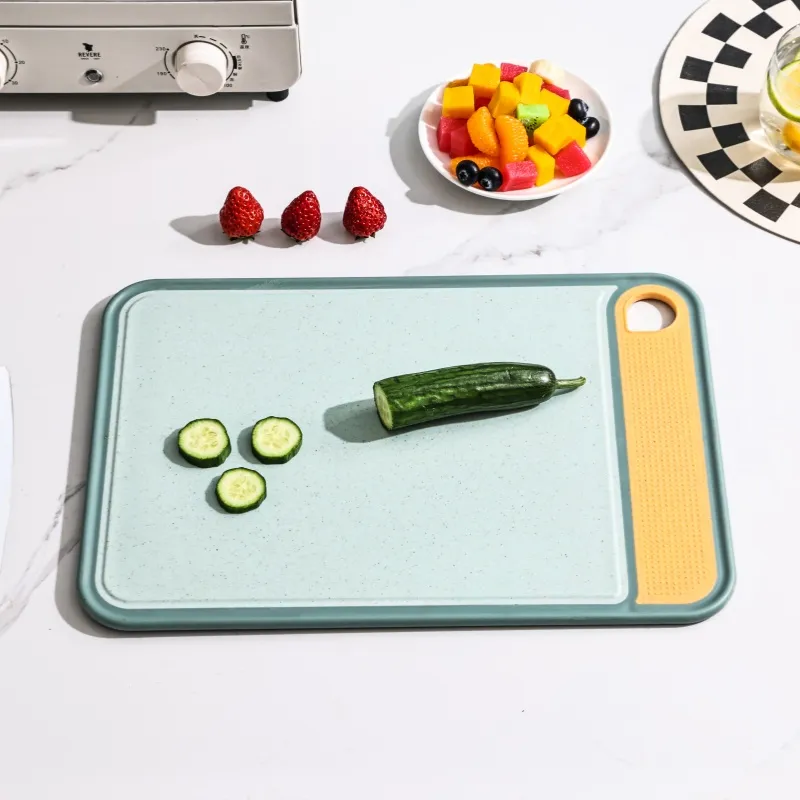
- Edge treatment and grip: A board that slides is a knife injury waiting to happen. Look for a moulded non-slip edge or feet rather than a flat sheet, and a juice groove if you handle raw protein.
None of that requires trusting a brand. It requires a specification you can check, and it works the same way whether you are buying from us or from anyone else.
Maintaining Your Chopaid Wheat Straw Cutting Board for Longevity and Hygiene
Investing in a high-quality, sustainable cutting board is the first step. The second, equally important step is maintaining it properly to ensure it remains a hygienic and long-lasting tool in your kitchen. Proper care will maximize the lifespan of your Chopaid wheat straw cutting board and keep it safe for all your food preparation needs.
Best Practices for Cleaning and Disinfecting Your Chopaid Wheat Straw Cutting Board
The cleaning method for a wheat straw cutting board depends heavily on its composition.
For 100% Plant-Based Boards: These boards can be somewhat porous. It is crucial to wash them immediately after use to prevent liquids and food particles from soaking in.
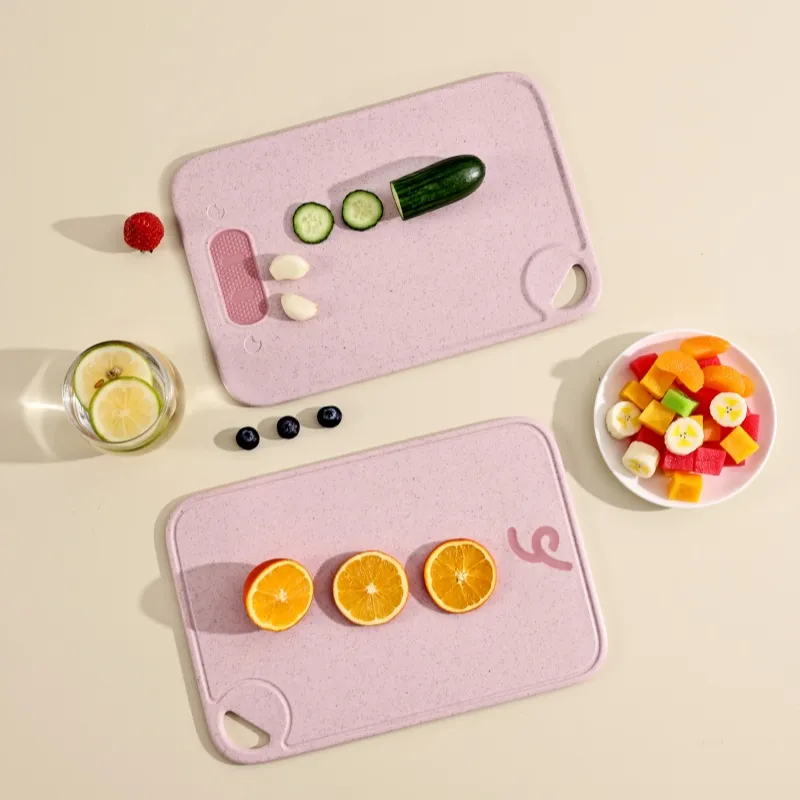
- Daily Cleaning: After each use, wash the board with hot, soapy water and a soft sponge or cloth. Washing both sides, even if you only used one, helps prevent uneven moisture absorption that could lead to warping.
- Drying: Immediately wipe the board dry with a clean towel and then allow it to air dry completely, propped on its side. Never let a plant-based board soak in water.
- Dishwasher: Avoid placing 100% plant-based or pure wheat straw boards in the dishwasher, as the high heat and prolonged moisture can cause them to warp or crack.
For Wheat Straw-Plastic Composites: Many of these are designed to be dishwasher-safe, which is a major convenience. The high temperatures in a dishwasher are effective for sanitizing. Always check the manufacturer's instructions first. If hand-washing, follow the same "wash and dry" method as above.
Natural Disinfecting & Deodorizing:
For a deeper clean, especially after working with raw meat or pungent foods like garlic and onion, you can use natural disinfectants.
- Vinegar Spray: Keep a spray bottle of undiluted white vinegar on hand. After cleaning, spray the board, let it sit for a few minutes, then rinse and dry. Vinegar's acetic acid is effective against many common bacteria.
- Hydrogen Peroxide: For an even stronger disinfectant, you can use 3% hydrogen peroxide. After washing and rinsing, pour a small amount onto the board, spread it with a clean sponge, and let it fizz for several minutes before rinsing and drying thoroughly. For a powerful disinfecting duo, you can spray with vinegar, wipe it down, and then follow with hydrogen peroxide.
- Lemon and Salt Scrub: To remove stubborn stains and odors, sprinkle coarse salt over the board, then use half a lemon to scrub the surface. The salt acts as an abrasive, and the lemon's citric acid helps to clean and deodorize. Let it sit for a few minutes, then rinse and dry completely.
Protecting and Restoring Your Chopaid Wheat Straw Cutting Board
Proper maintenance goes beyond cleaning; it involves protecting the board's surface to maximize its lifespan and restoring it when it shows signs of wear.
To Oil or Not to Oil?
The need for oiling depends on the cutting board's material:
- 100% Plant-Based and Wood/Bamboo Boards: These materials are porous and can dry out over time, leading to cracks or warping. Regular oiling is essential. It works by saturating the wood fibers, which prevents other liquids (like meat juices) and bacteria from soaking in. It's a crucial step for both hygiene and durability.
- What Oil to Use: Always use a food-safe oil. While food-grade mineral oil is common, many people prefer a plant-based option to avoid petroleum byproducts. Good alternatives include refined coconut oil (which is resistant to going rancid), food-grade linseed oil, or a pre-made board conditioner containing beeswax and carnauba wax. Avoid using common cooking oils like olive or vegetable oil, as they can go rancid and make the board smell.
- How to Oil: Apply a generous amount of oil to a clean, completely dry board. Use a soft cloth to rub the oil into all surfaces, including the sides. Let it soak in for several hours or overnight, then wipe off any excess. This should be done about once a month, or whenever the board looks dry.
- Composite Boards (Wheat Straw-Plastic or Paper-Resin): Most composite boards are non-porous and do not require oiling. Their surfaces are sealed during manufacturing. However, some manufacturers note that applying a board conditioner can enhance the appearance and luster of the board, though it is not necessary for protection.
Restoring the Surface:
Over time, even the best boards will develop knife marks. For wheat straw composites and wood or bamboo boards, these can be addressed to restore a smoother, more hygienic surface.
- Light Scratches: For minor scratches, you can often gently sand the surface. Start with a fine-grit sandpaper (e.g., 220-grit) and sand in the direction of the grain (if applicable).
- Deeper Grooves: For more significant damage, start with a coarser grit (like 80 or 120-grit) to remove the knife marks, then move to finer grits (180 and finally 220) to smooth the surface back out. After sanding, it is crucial to thoroughly clean the board to remove all dust and then re-apply a food-safe oil to season the newly exposed surface.
By regularly protecting and occasionally restoring your cutting board, you ensure it remains a safe, attractive, and functional centerpiece of your kitchen for years to come.
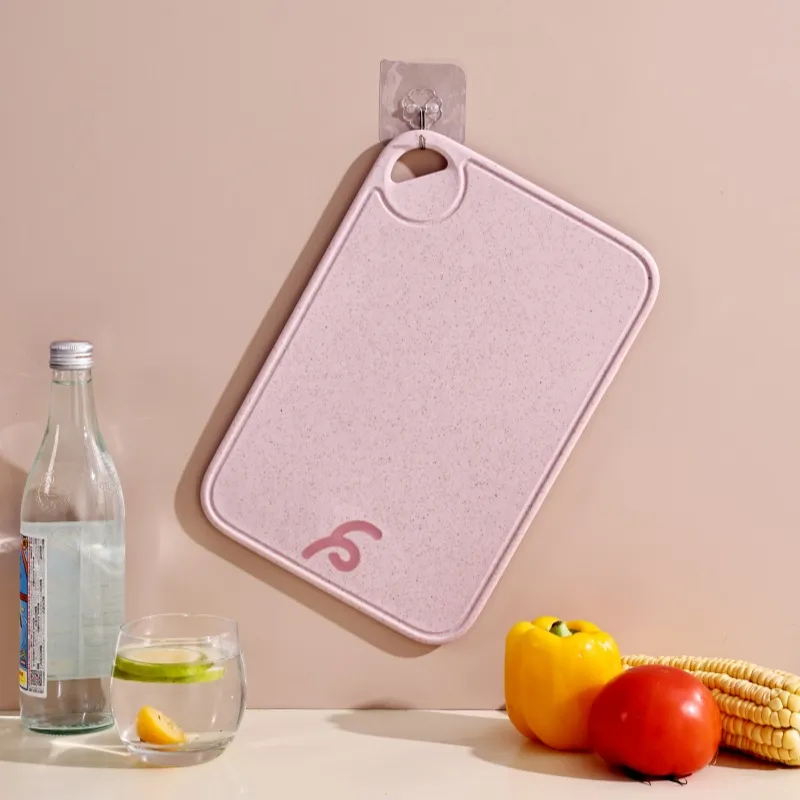
Knowing When to Replace and How to Dispose of Your Chopaid Wheat Straw Cutting Board
Even the most durable cutting boards have a finite lifespan. Knowing when to retire your board is critical for kitchen hygiene and safety. Continual use on a compromised surface can introduce bacteria into your food and pose a safety risk if the board is unstable.
Signs It's Time for a Replacement:
Pay attention to these clear indicators that your cutting board is past its prime:
- Deep Grooves or Scratches: This is the most common reason for replacement. If your board has deep knife marks that you can't easily clean, it's time for a new one. These grooves are breeding grounds for bacteria like Salmonella and E. coli.
- Warping or Instability: A board that rocks or spins on the countertop is a safety hazard, as it can cause your knife to slip. Warping is often caused by improper drying or exposure to high heat and is usually irreversible.
- Cracks and Splitting: Any visible cracks, especially in wood, bamboo, or composite boards, are a major red flag. They can trap moisture and bacteria deep within the board where it's impossible to clean.
- Persistent Stains or Odors: If your board retains strong smells (like onion or garlic) or stubborn stains (like from beets or turmeric) even after deep cleaning and deodorizing, it's a sign that the surface is too porous and worn to be properly sanitized.
For a plastic cutting board, a good rule of thumb is to replace it yearly if it's used regularly. A high-quality wood or plant-based composite board can last for several years with proper care.
How to Dispose of Your Cutting Board:
Responsible disposal is the final step in a cutting board's life cycle. The method depends entirely on what it's made of:
- 100% Plant-Based Boards (e.g., pure wheat straw, wood): If your board is made from completely natural, untreated materials, it can be composted. You can break it into smaller pieces to speed up decomposition in your home compost pile or place it in your municipal green waste bin.
- Wheat Straw-Plastic Composites: Because these boards contain plastic binders like polypropylene, they are not compostable or biodegradable. Most cannot be recycled in standard residential programs. Unless the manufacturer provides a specific take-back program, these boards must typically be disposed of in a landfill.
- Wood or Bamboo Boards with Adhesives: These are also generally not suitable for composting because the glues can contain synthetic chemicals. Some waste management facilities advise putting them in the landfill bin.
- Repurposing: Before throwing a board away, consider if it can be repurposed. An old wooden board can be sanded and used as a serving platter for non-cut items, a decorative base for a plant, or for various craft projects.
By recognizing the signs of wear and understanding the proper disposal method for your specific board, you complete the cycle of responsible kitchenware ownership.
Frequently Asked Questions (FAQs)
1. Are wheat straw cutting boards really better than plastic? Better at one thing, and honest about the rest. A good wheat straw board uses around 30% less virgin petroleum than an all-plastic board of the same size, holds its surface denser, and can carry an antimicrobial agent that a plain plastic board does not. It is not biodegradable and it does contain polypropylene, so it is not a plastic-free product. Whether that trade is worth it comes down to the grade you buy: a 30% straw board in virgin food-grade PP is a different product from a 5% straw board in regrind, even though both say wheat straw.
2. How can I tell what is actually in one? Ask three questions and see whether the answers are specific. What percentage of the board is wheat straw by weight, and is that figure in the written spec? Is the polypropylene virgin food-grade, or regrind? Is the finished board certified to FDA or LFGB, as a product rather than a raw material? A supplier who answers all three with numbers and certificates is worth buying from. Vague words like eco-friendly, natural or green, without those three answers, are marketing.
3. Are all wood cutting boards safe? Not necessarily. While solid wood from a single slab is an excellent choice, many wood boards are made from smaller pieces glued together. The safety of these boards depends on the adhesive used. Look for boards that explicitly use formaldehyde-free, FDA-approved food-safe glue. Also, ensure the board is finished with a food-safe oil (like pure mineral oil, or plant-based alternatives like refined coconut or tung oil) and not a synthetic lacquer or varnish. Sourcing from reputable brands that are transparent about their materials is key.
4. How often should I replace my cutting board? Thickness and surface condition predict lifespan far better than material does. As a rough guide:
- Thin plastic boards, under 8 mm: roughly yearly, or as soon as the grooves stop coming clean.
- Thick composites and hardwood: five to ten years with care, longer for end grain. Replace on warping, cracking or gouges that cannot be sanded out.
- Bamboo and wheat straw composites: two to five years, and the spread is almost entirely about thickness. A 6 mm board and an 18 mm board made from the same material have nothing in common.
5. Can I cut raw meat on a wood or wheat straw cutting board? Yes, but with proper precautions. The key is to prevent cross-contamination. Many food safety experts recommend using a separate, non-porous board (like a specific plastic or composite board) exclusively for raw meat, poultry, and fish, as they can be easily sanitized in a dishwasher. If you do use a wood or plant-based board, you must wash and disinfect it immediately and thoroughly with hot, soapy water and a sanitizer like white vinegar or hydrogen peroxide before it touches any other food.
Conclusion
In my quest for the ultimate non-toxic and eco-friendly kitchen, I've learned that making informed choices about our cutting boards is paramount. It’s not just about what we cook, but what we cook on. Every slice and dice is an interaction with a surface that can either support our health or subtly undermine it.
While the concept of the Wheat Straw cutting board offers a promising glimpse into a more sustainable future, it's crucial to scrutinize the specifics of each product. We must look beyond the green marketing and demand transparency about the binders, finishes, and true biodegradability to ensure these products align with genuine health and environmental standards.
So the useful conclusion is not that one material wins. It is that four numbers decide what you are actually buying, whichever material you land on: how much of it is plant fibre, whether the resin is virgin and certified, how thick the board is, and what happens to the surface after a year of knives. Ask those four questions of any board, including ours, and you will not be talked into anything.
Our wheat straw boards, specifications included
We are the manufacturer, so here are the boards in our own wheat straw line with the numbers that matter. Custom size, colour, logo and packaging from 500 pcs.
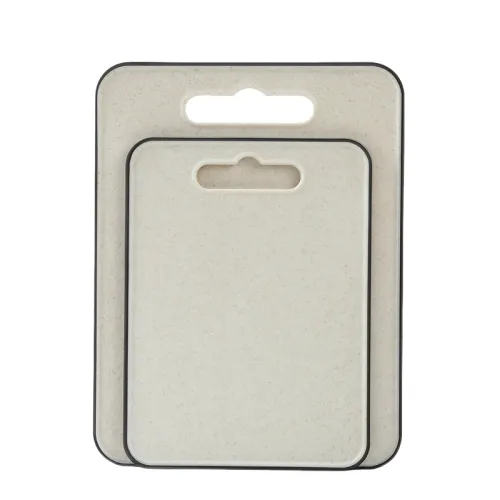 Our flagship wheat straw boardWheat Straw Board 11.4 x 14.9 inWheat straw + PP + TPE · 1.0 cm thick · non-slip · dishwasher safe · brownView specs →
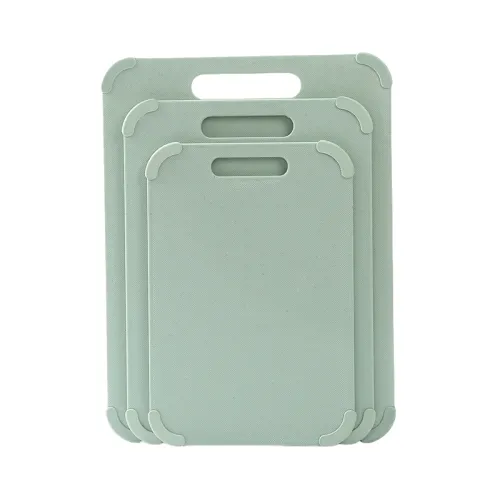 Softest on knivesTPE-Faced Wheat Straw Board 10.6 x 14 inTPE cutting face + wheat straw · 1.8 cm thick · four colours · anti-slip padView specs →
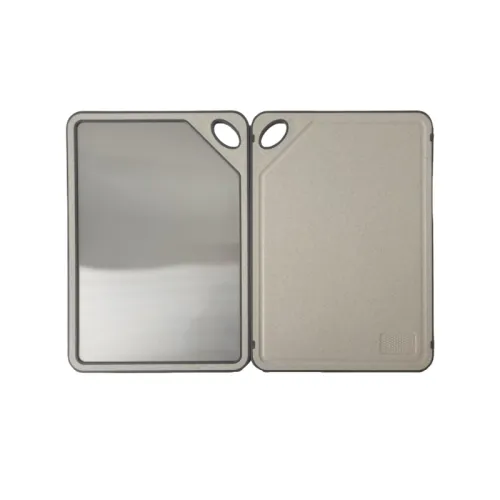 Two surfacesTitanium and Wheat Straw Double-SidedTitanium side for raw protein · wheat straw side for produce · 40 x 28 x 1.1 cmView specs →
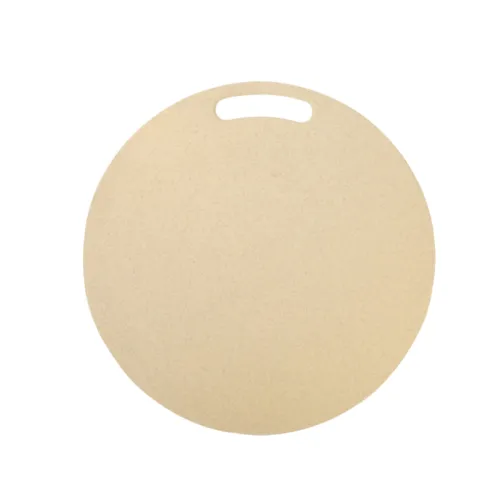 Small and lightRound Wheat Straw Board 8 inPP + wheat straw · 21.5 cm diameter · 4 mm · for fruit, cheese and quick prepView specs →